
Excursion to Templestowe
16 06 26 14:27 Filed in: Children 1950s
Sue and I both remember our grandparents’ Templestowe house. Sue even remembers walking from the house with our grandfather: down to the creek, across the bridge and up the other side.
For me the most memorable thing for both of us is their neighbour, a farmer, a woman about the same age as our grandparents. Why do we remember this? Because she had a prominent and impossible to ignore moustache!
They bought the Templestowe block, two acres on a hillside above the Yarra, in 1950. It had been part of a dairy farm, and still had on old cow shed or dairy and a dam on site.
We listened to Marge and Alice discussing the Templestowe House:
I looked it up on Google maps and was excited to find that, although the whole hillside is now covered in houses, the creek, which turns out to be Ruffey Creek, now has a walking track along side it.
It was clearly time for an excursion.
On a warm, sunny April afternoon, we set out, with our trusty driver, Jono.
The single lane dirt road, Foote Street, on which our grandparent built, is now a busy highway, so we parked in a side street and set out along the Ruffey Creek walking track. It was weedy and neglected, but pleasant enough.
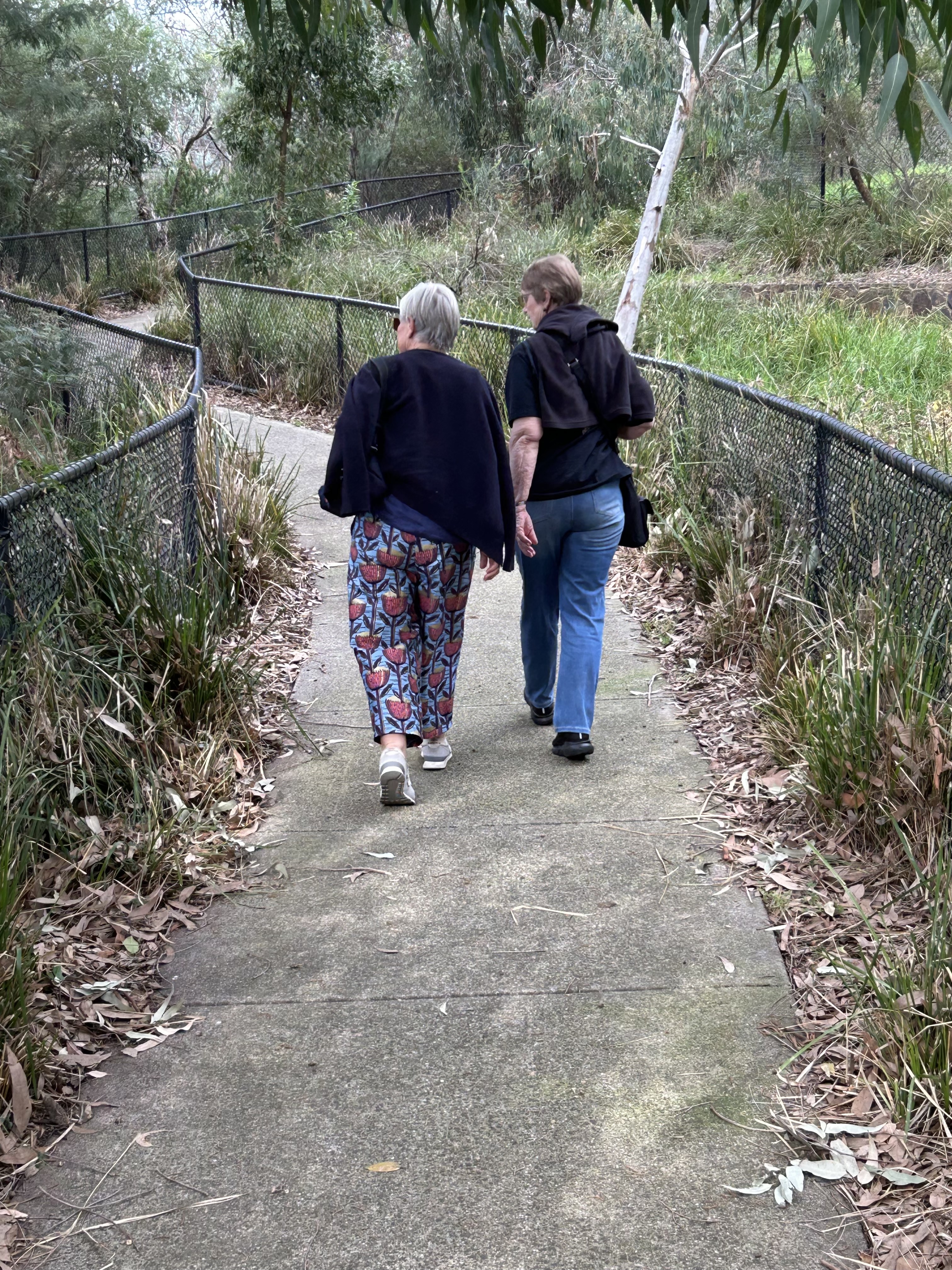
We realised that were walking where the moustache lady’s farm would have been. The track is not continuous, and we soon found ourselves at an intersection.
Navigation is not our family’s super power.
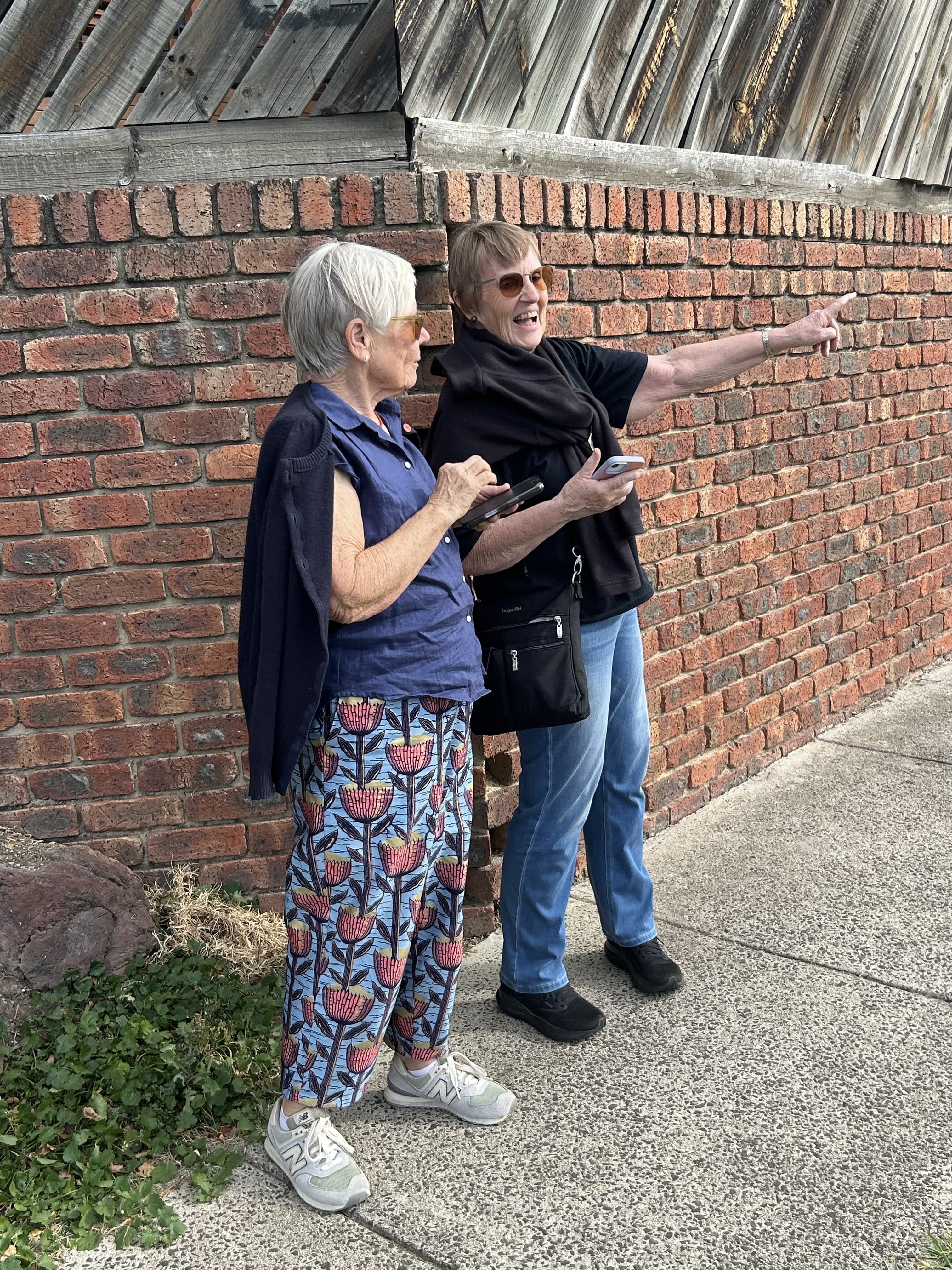
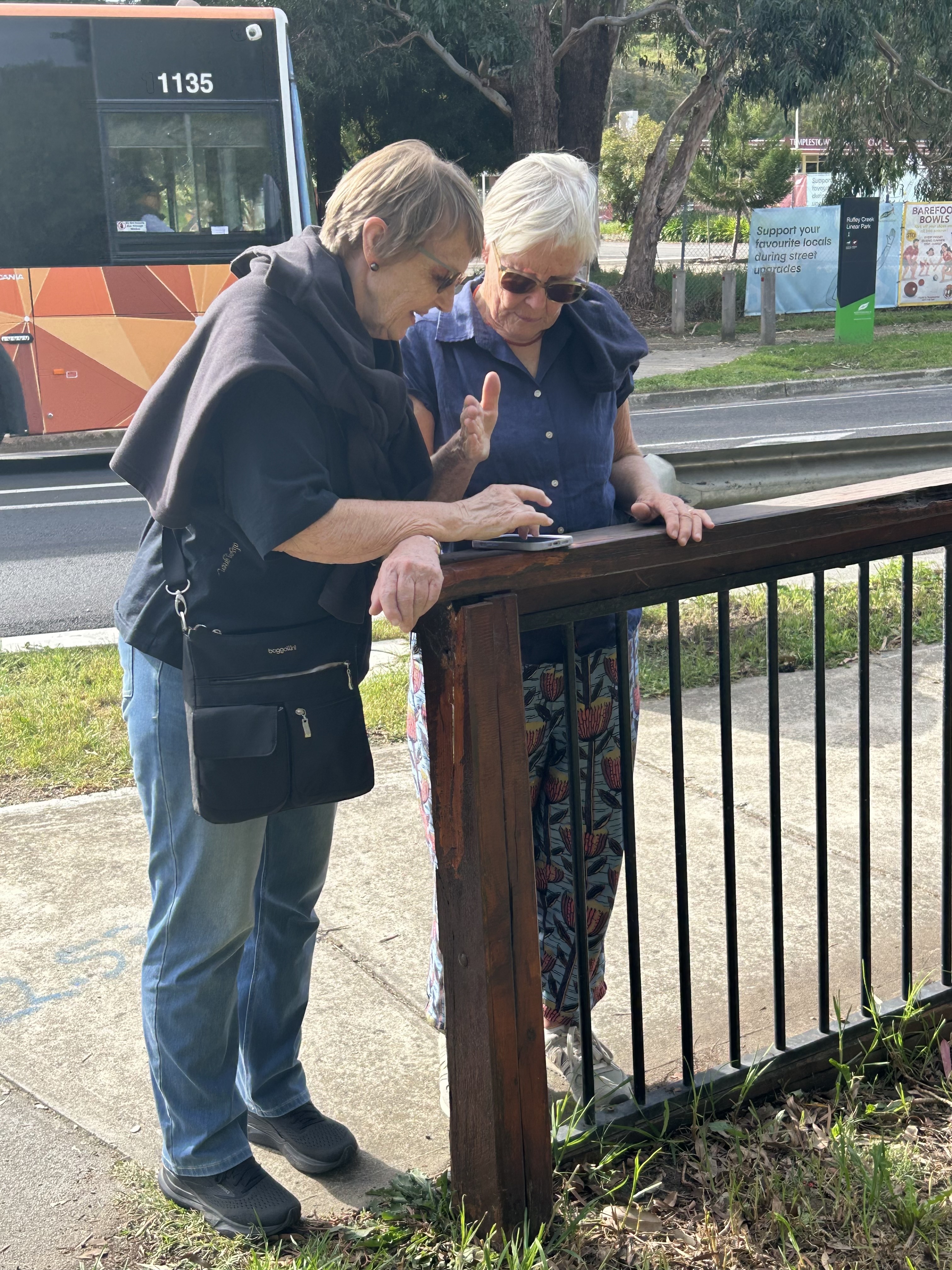
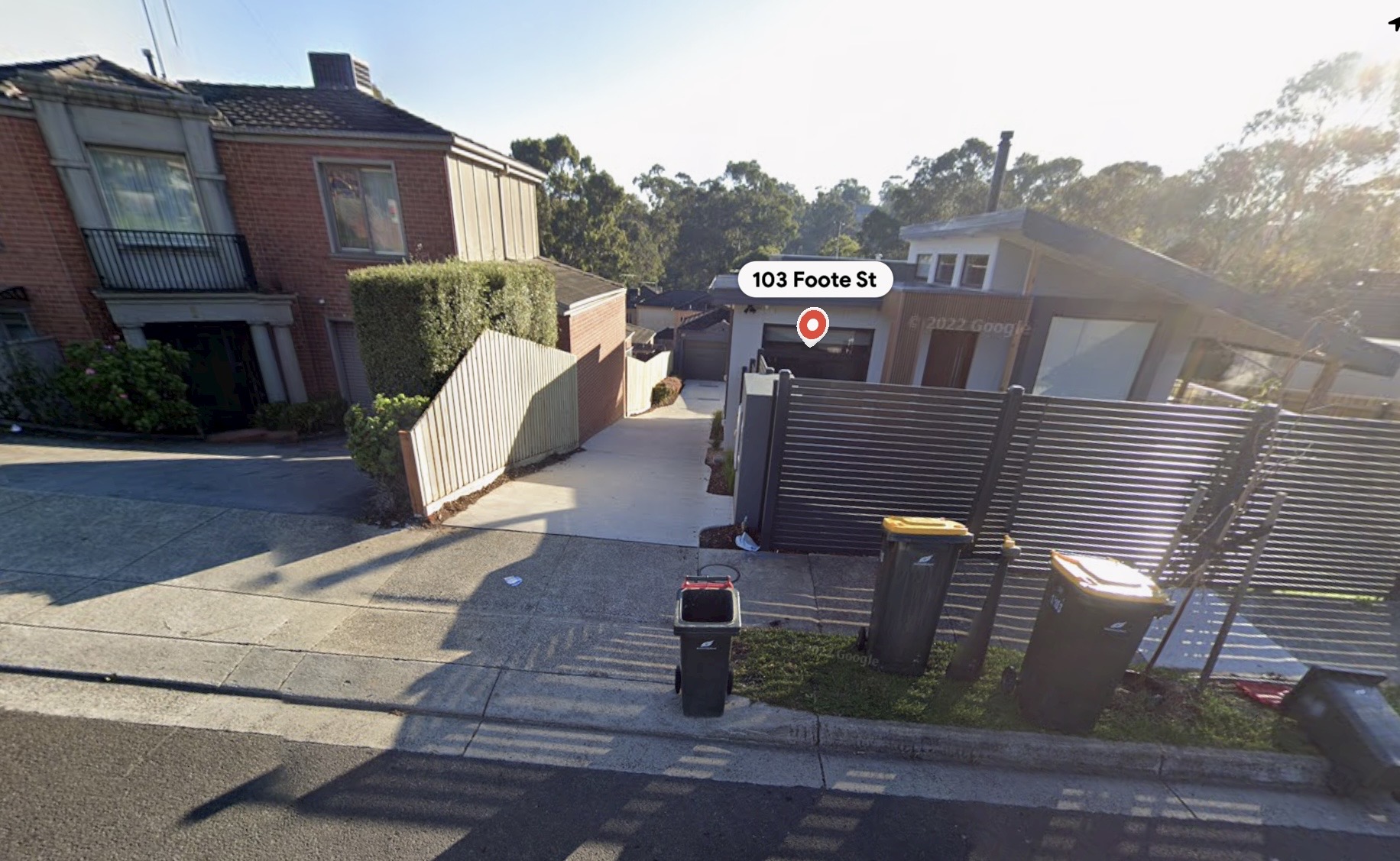
Eventually we worked out the right way, and soon we were standing looking, across four lanes of traffic at the area where the house would have been. There are a few candidates for the exact spot, but it was more or less here:
Because we are elderly, Susan made us cross at the lights. We set off to work our way round to the bottom of the hill.
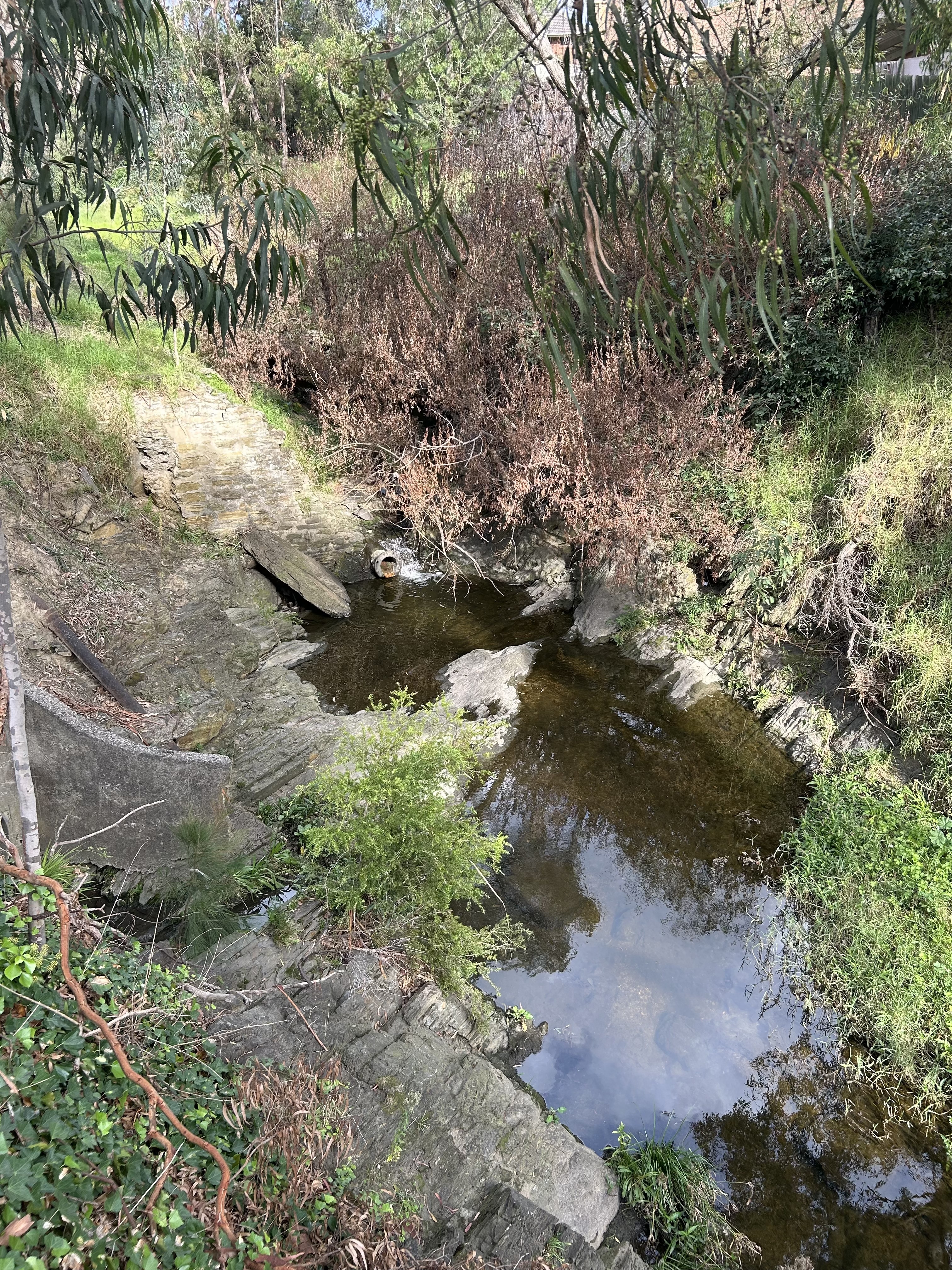
There is a new bridge, but we discovered the remnants of the old bridge, which must be one Sue remembers walking across with our Grandfather.
It was tucked in among the weeds.
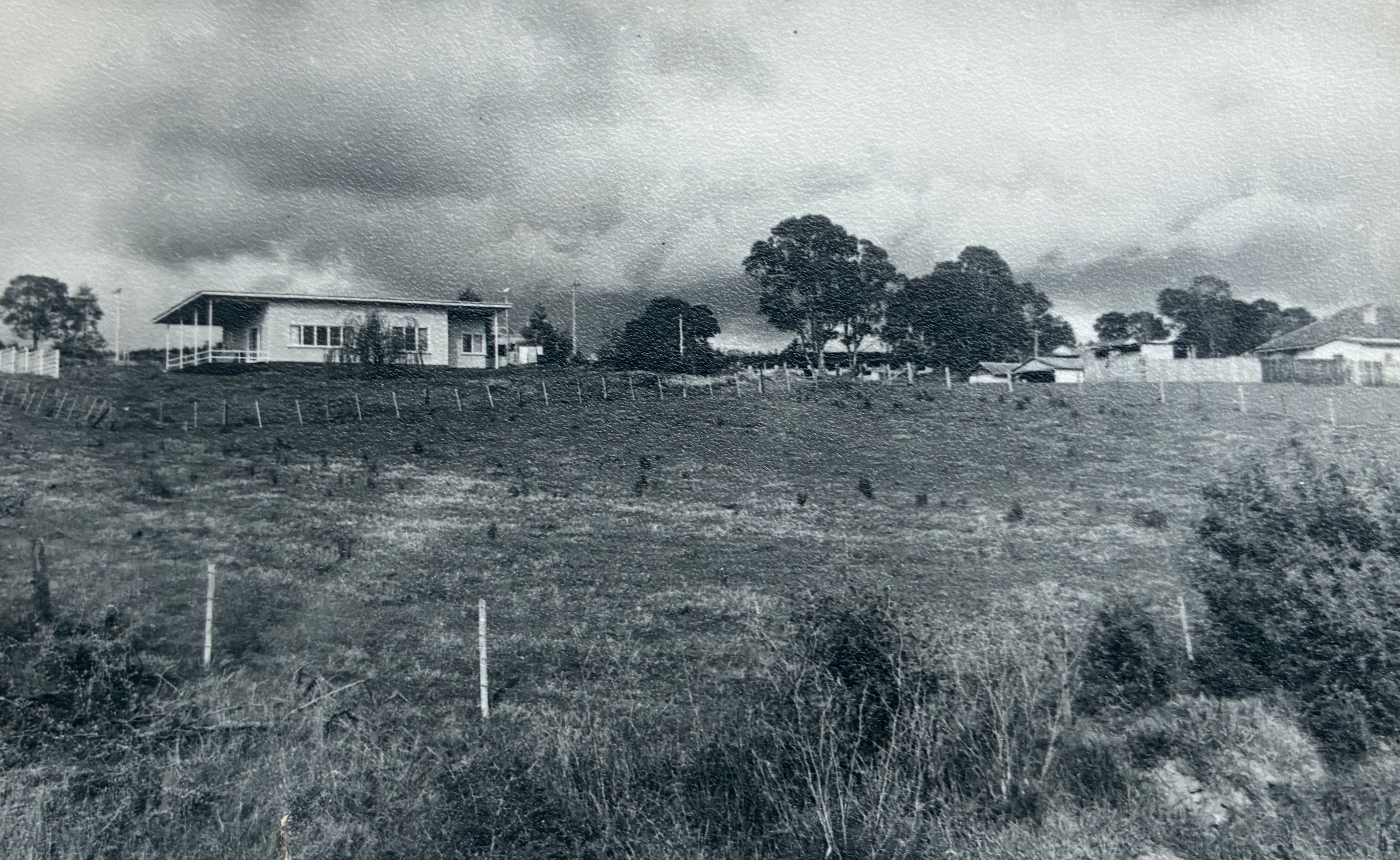
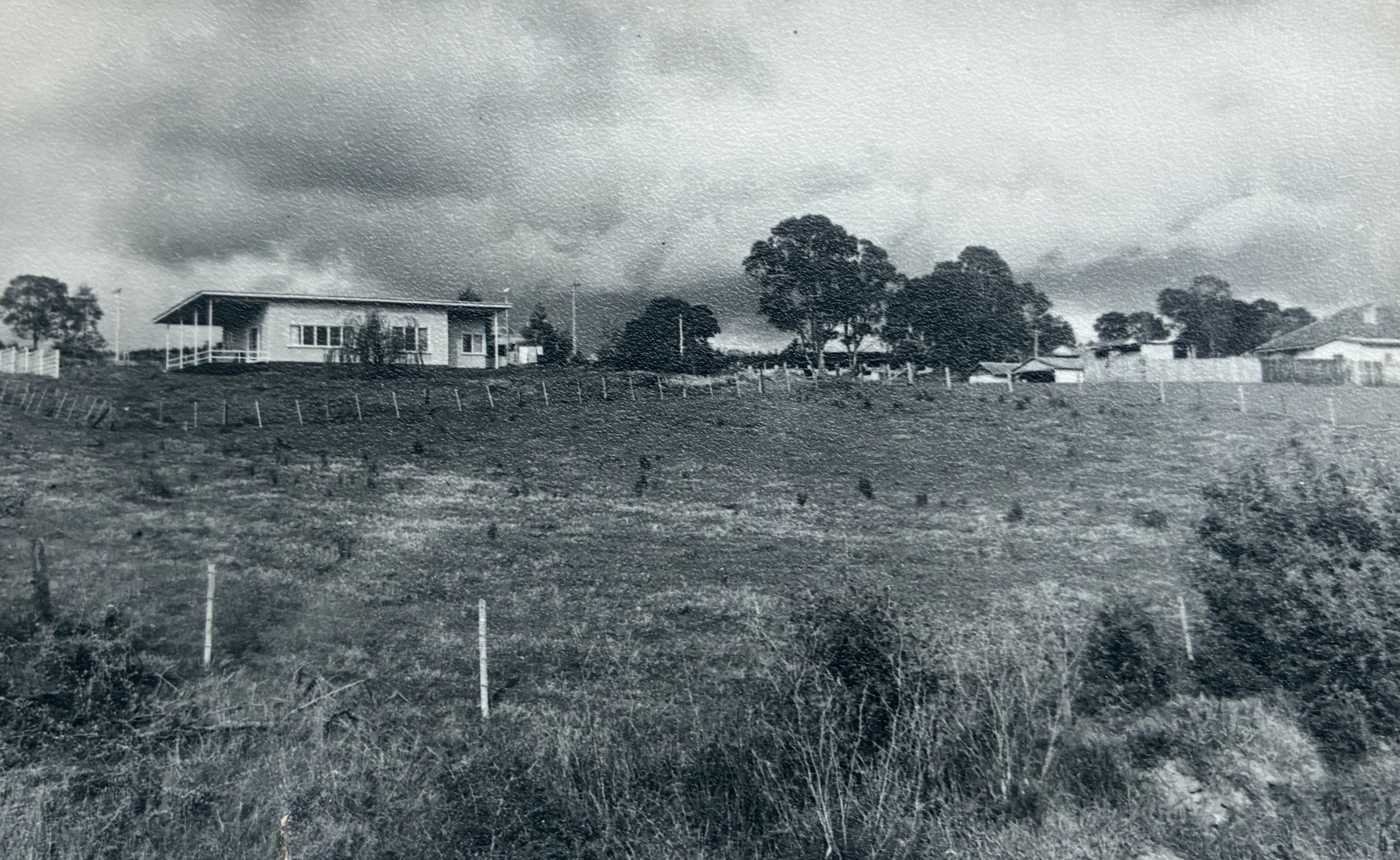
We retraced our steps and, back home, Sue rummaged through the family photograph box and found a photo of the house:
My new special friend, Claude, from the house of Anthropic, couldn’t find any references to Alfred and Alfreda buying or selling the property, but he did find them “a charmingly matched pair”, and suggested many rabbit holes down which we could search.
There had been early settlers on the rich river flats along the Yarra River since the 1830s. The land was cleared, and large estates established.
By 1920, the first subdivisions were occurring, and more orchards and smaller farms sprang up.
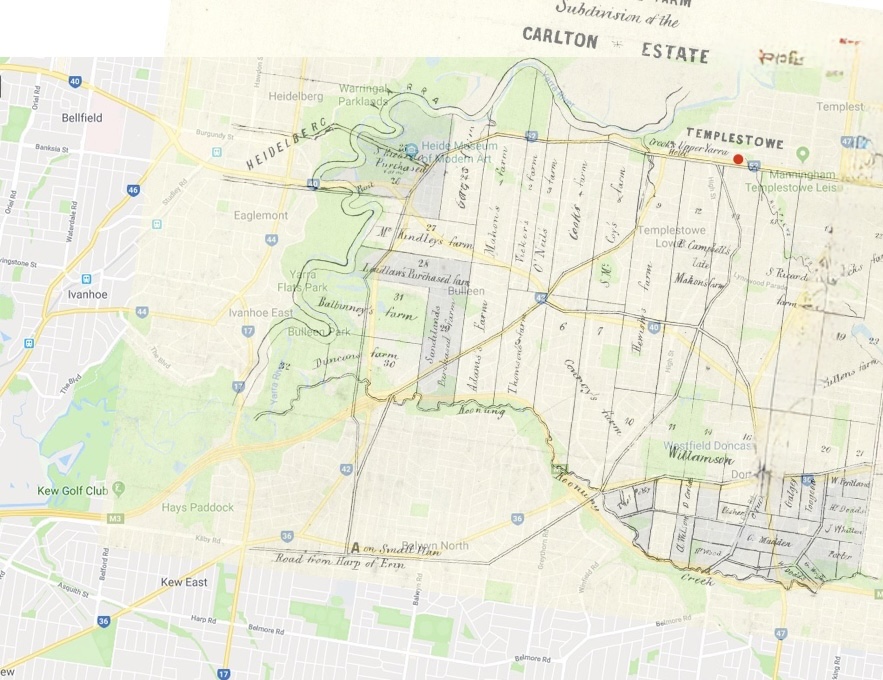
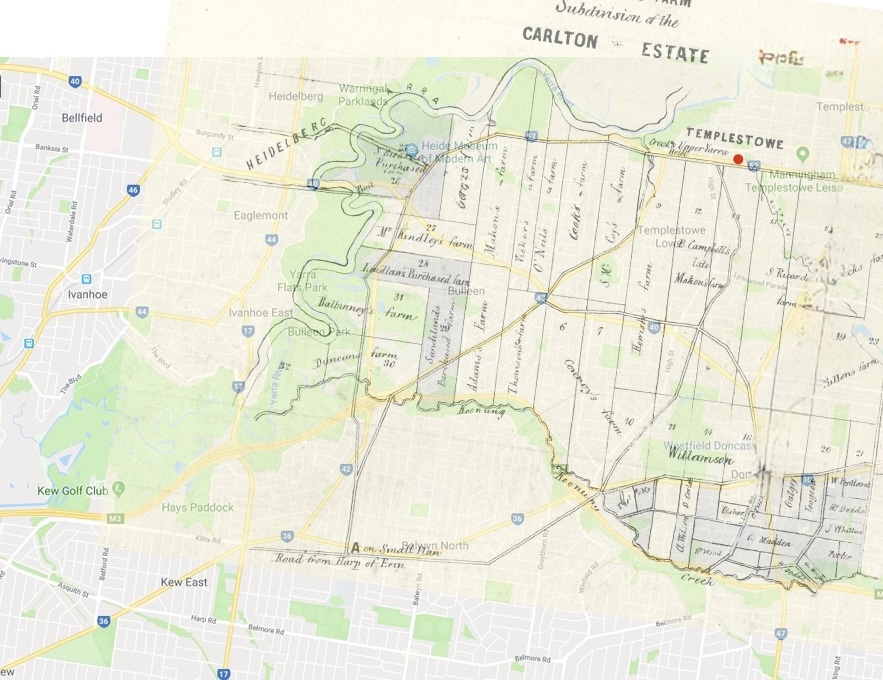
This map of the area shows the early subdivision of the “Carlton Estate, across the road from where Alf and Alfreda bought their land. The red dot is their eventual property:
At the end of the Second World War in 1945, an increase in migration, and the return of servicemen brought about a housing boom. This was most pronounced in suburbs like Doncaster/Templestowe and Box Hill, where our own parents bought land. Council rating systems encouraged the suburbanisation of what had been farming land and orchards. Housing estates and supermarkets took over.
It was in this phase of development that Alf and Alfreda bought their block. They must have watched neighbouring Doncaster’s orchards disappearing, and the new suburb expanding east to their little haven.
From 1950 to 1960, the population of Doncaster/Templestowe increased from 5000 to 15000. By then Alf and Alfreda, spooked by the encroaching suburbia, had sold up and moved.
Journey to Templestowe
We have few memories of the Templestowe house, but, one that looms large, is of one of the journeys there. It seemed a long way. We remember it as a journey on narrow dirt roads that wound their way through orchards and paddocks The area was not easily accessed by public transport, but luckily we had a car.
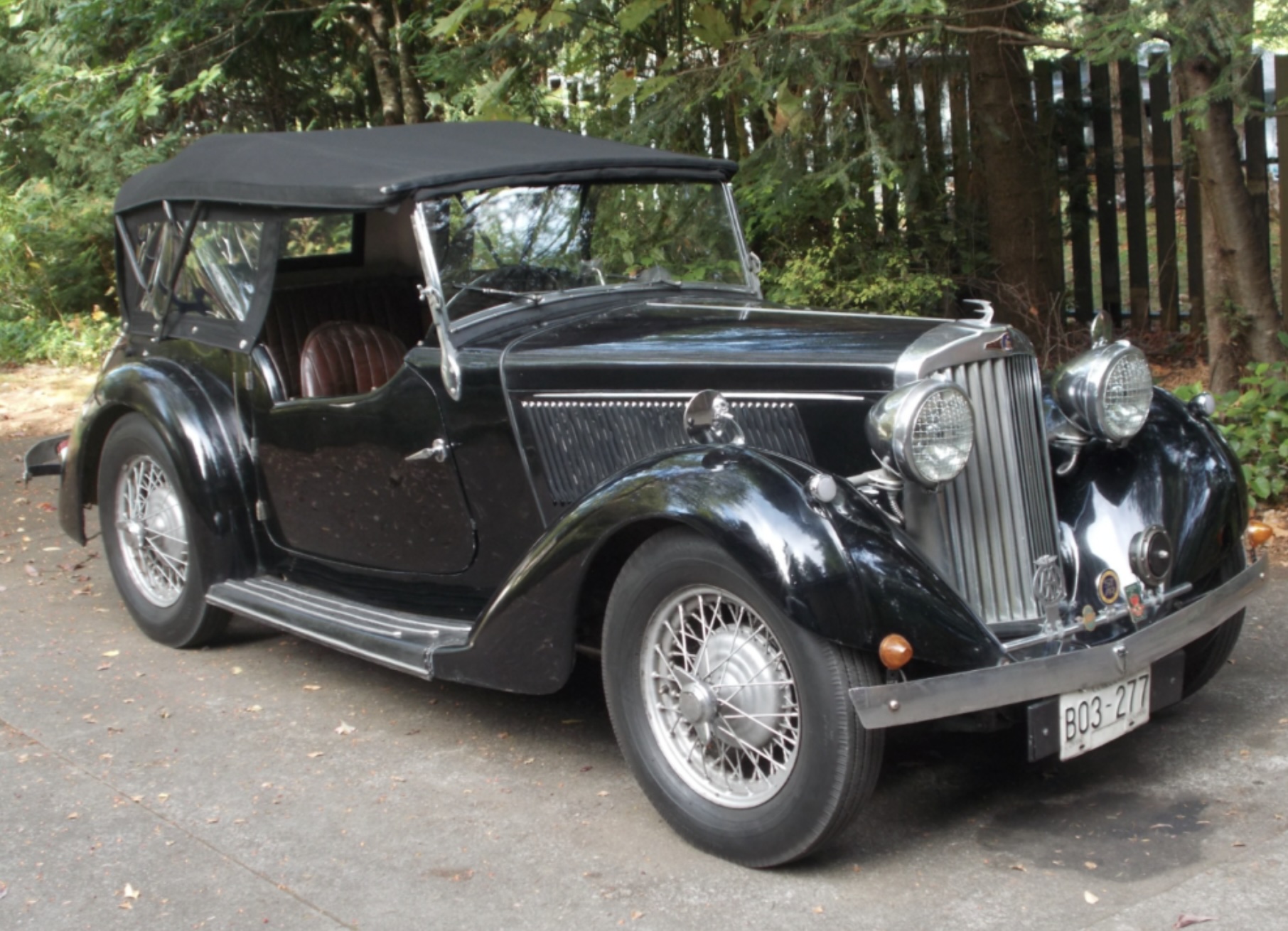
Our first car was a black Sunbeam with large sweeping mudguards and running boards. It was a soft top with side curtains, a classic vintage car, and a very imposing presence in the garage. Maybe that is why, three or four year old Margaret, at Sunday School, enthusiastically sang the children’s hymn ‘Jesus Wants Me For A Sunbeam’, never questioning why Jesus may have wanted her for a car.
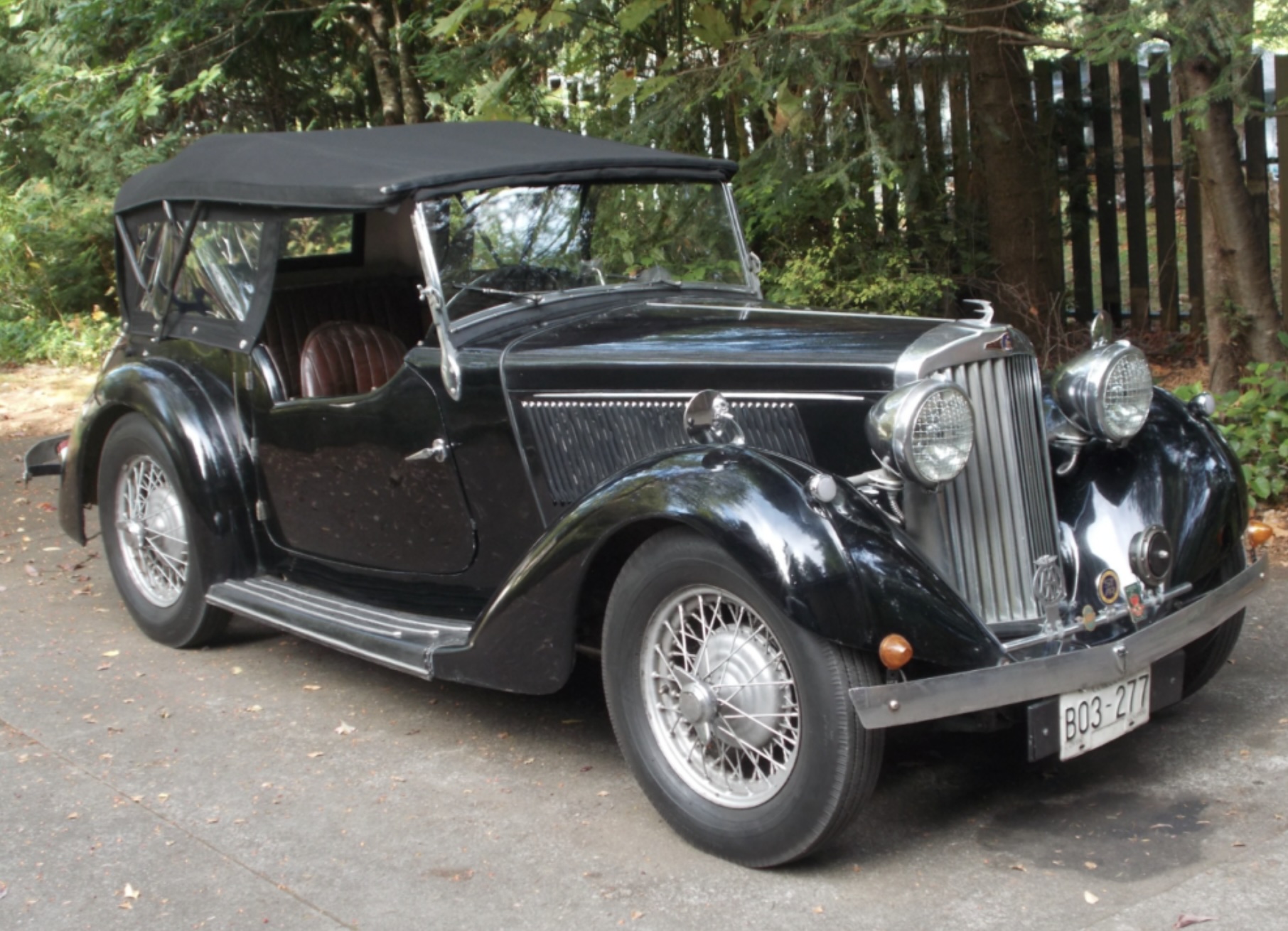
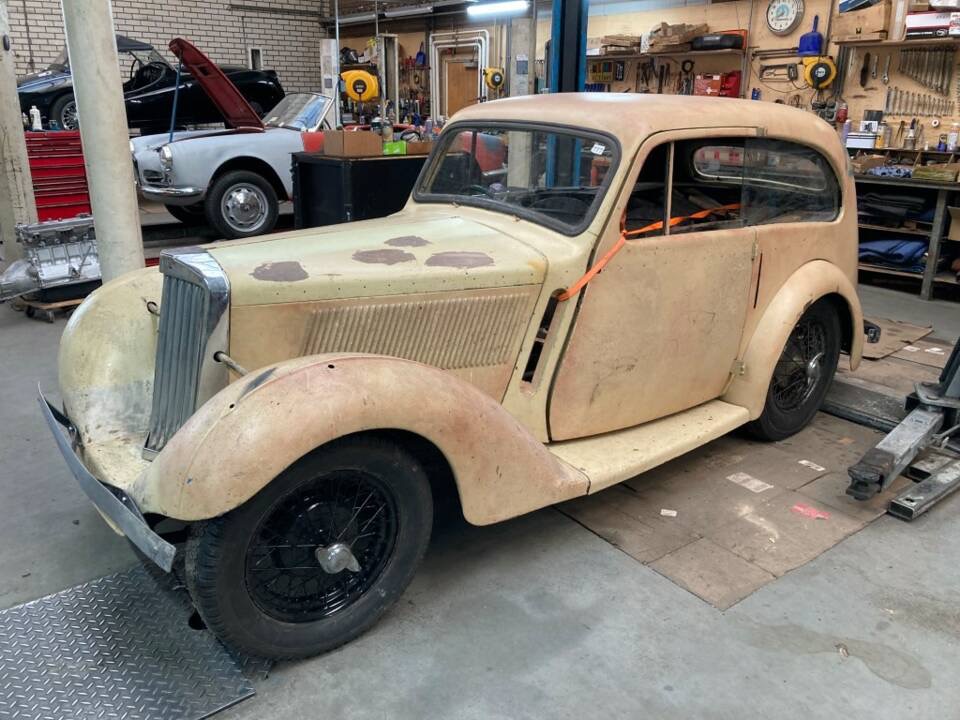
The cream Talbot replaced the Sunbeam. It was a large, very square, solid car, with wind up and down windows instead of draughty side curtains.
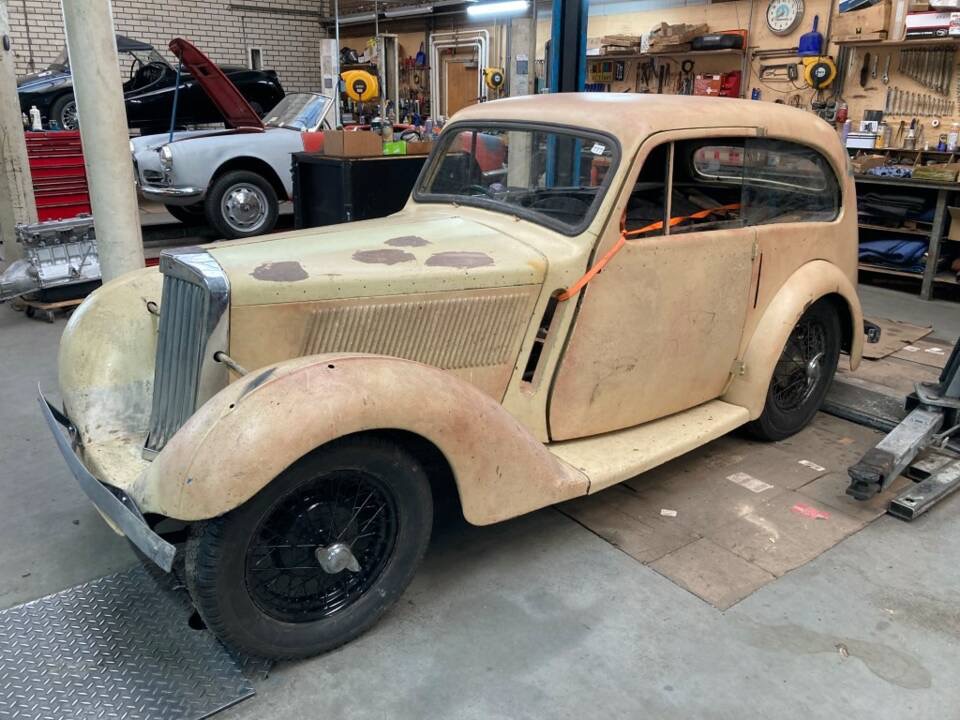
One memorable journey to Templestowe involved the Talbot. The route from Wattle Park to Templestowe was much the same as would be today: down Station Street, through Box Hill shopping centre, across Whitehorse Road to Tram Road, and up the big hill towards Doncaster. The route may be the same, but of course much has changed.
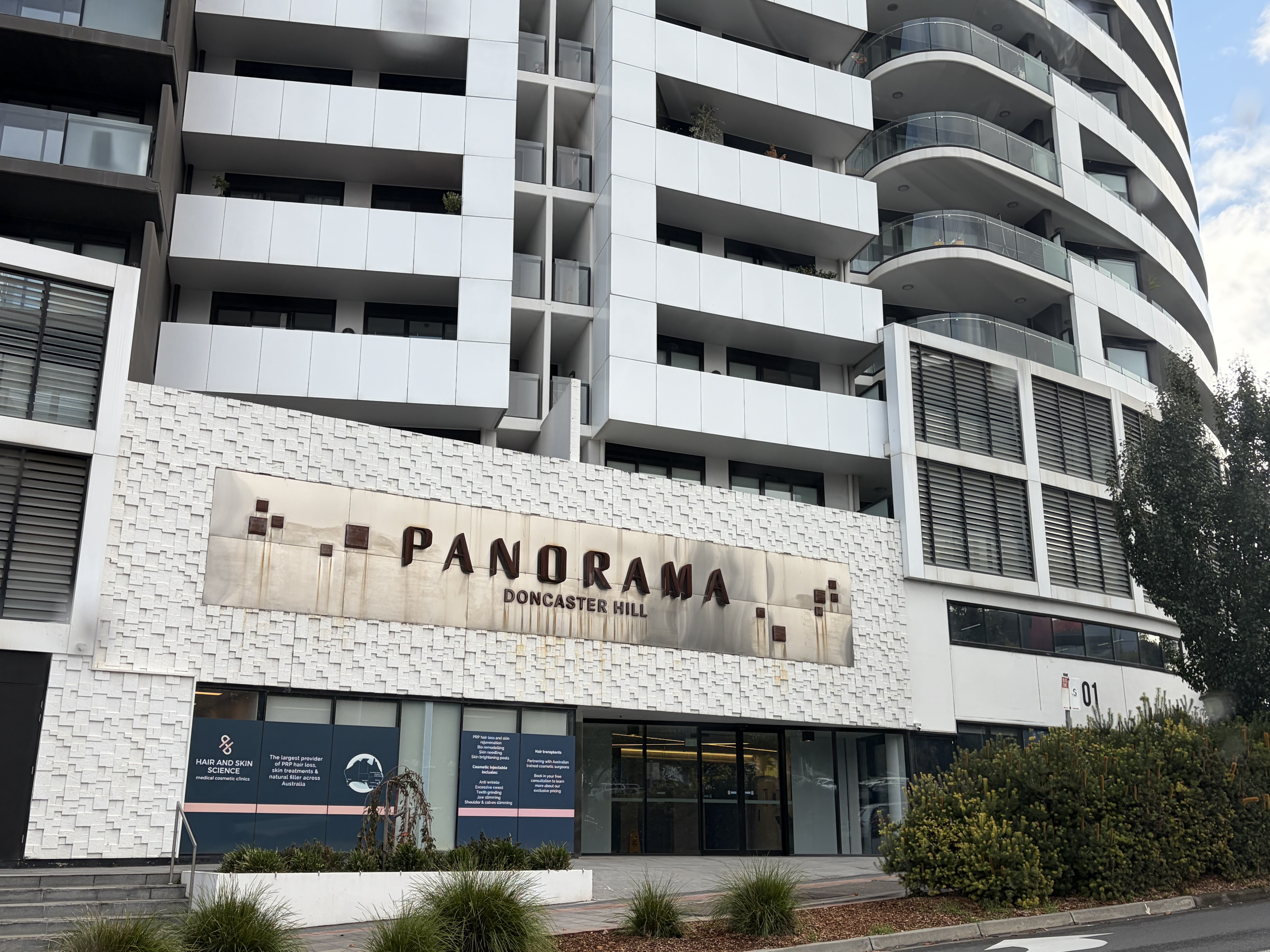
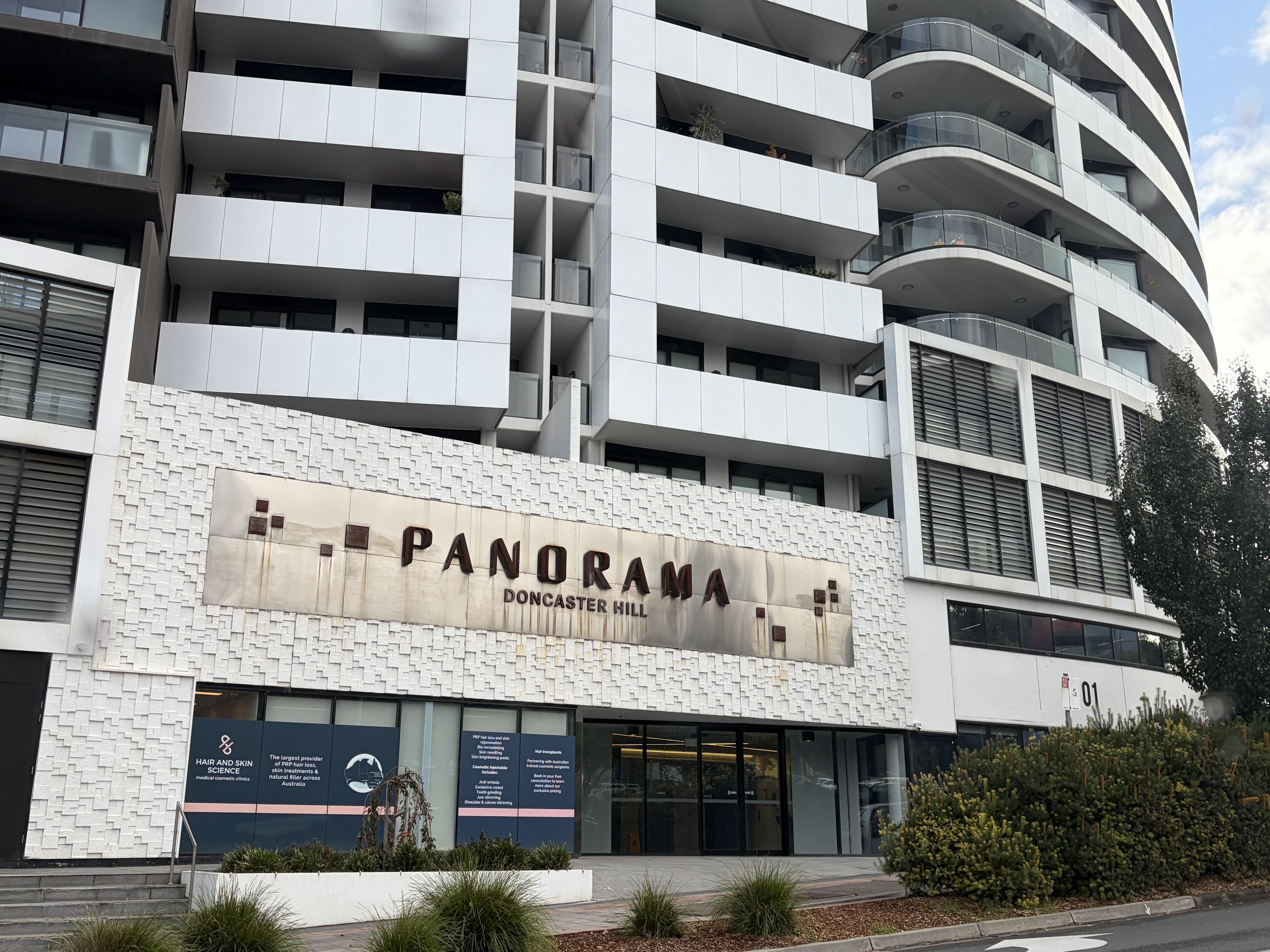
It took a little while to solve the puzzle of “White’s Corner.” Were our memories correct and why was it called Whites Corner? This intersection is now a major residential and shopping precinct. Westfield Shopping centre sprawls across one corner blocking what was once an expansive view of orchards and is now suburban Doncaster. On the other corners are clusters of multi storey apartment blocks and the intersection has been simplified to cope with the traffic and facilitate the growth.
White's corner now:
White's corner then:
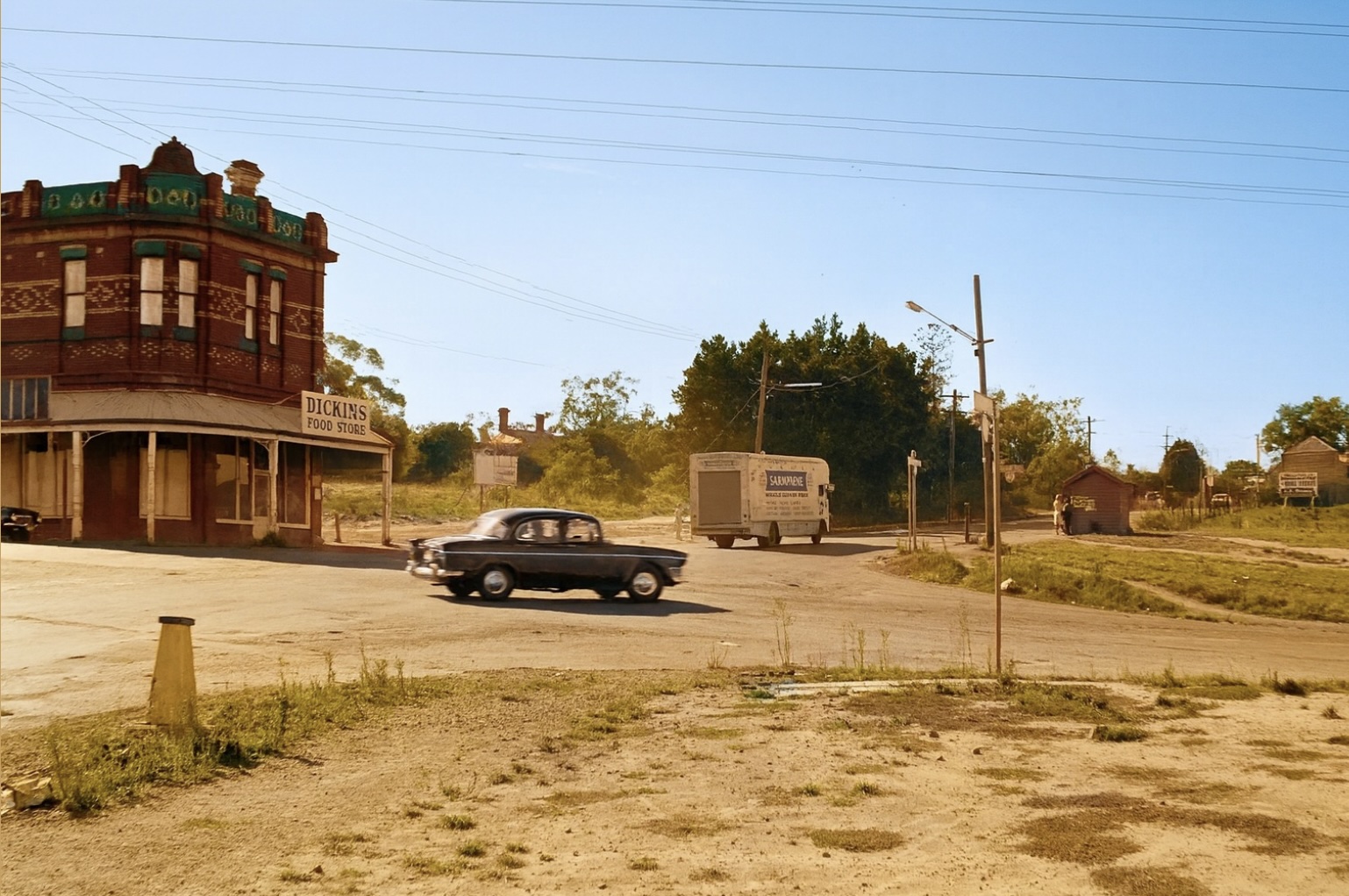
We remember it as a straight crossroad but I can find no images that match my memory exactly. Puzzle solved! it was always a three way intersection of three roads: Tram Road, which becomes Williamson Road, Elgar Road and Doncaster road. Memory is not always an entirely reliable source. From our position beside the broken down car, we would not have seen Tram Road.
I remember the lop sided car and a hotel or store where we asked for help on that windy, isolated corner. Margaret on the other hand, remembers the donkey or small horse, an ungulate anyway. No doubt small Margaret was being amused or distracted as we waited for Mr McAlpine, a neighbour, to tow us home. .
Maybe the building at the corner we remember was the store, originally Serpell’s Store, which was, at a later date, rented by a gentleman TM White, hence the name of the corner.
The broken axle at White’s Corner looms large in our childhood memories but all ended well and we presume the Talbot axle was replaced, almost certainly by Jim, and we were mobile once more.
For me the most memorable thing for both of us is their neighbour, a farmer, a woman about the same age as our grandparents. Why do we remember this? Because she had a prominent and impossible to ignore moustache!
They bought the Templestowe block, two acres on a hillside above the Yarra, in 1950. It had been part of a dairy farm, and still had on old cow shed or dairy and a dam on site.
We listened to Marge and Alice discussing the Templestowe House:
I looked it up on Google maps and was excited to find that, although the whole hillside is now covered in houses, the creek, which turns out to be Ruffey Creek, now has a walking track along side it.
It was clearly time for an excursion.
On a warm, sunny April afternoon, we set out, with our trusty driver, Jono.
The single lane dirt road, Foote Street, on which our grandparent built, is now a busy highway, so we parked in a side street and set out along the Ruffey Creek walking track. It was weedy and neglected, but pleasant enough.
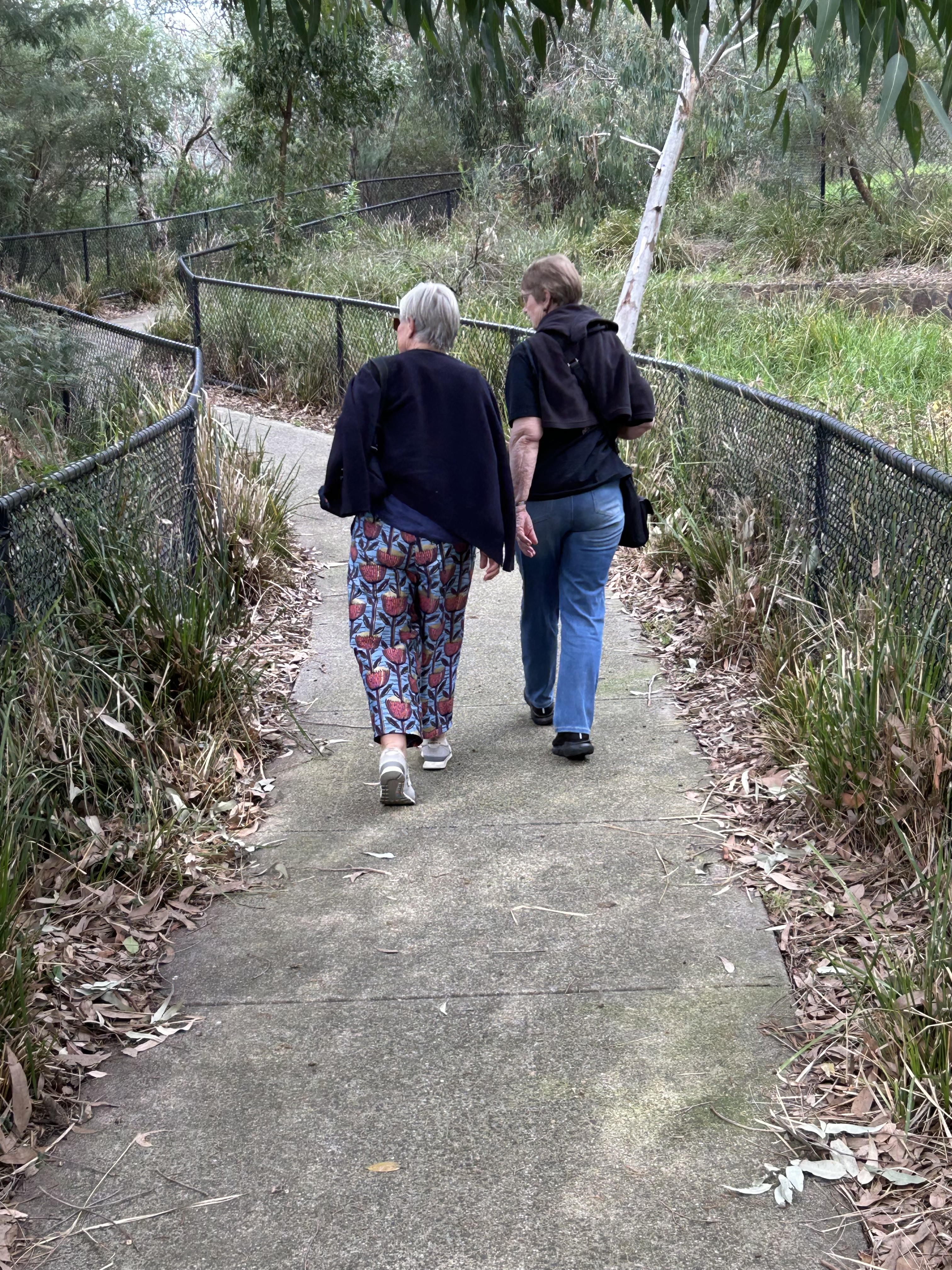
We realised that were walking where the moustache lady’s farm would have been. The track is not continuous, and we soon found ourselves at an intersection.
Navigation is not our family’s super power.
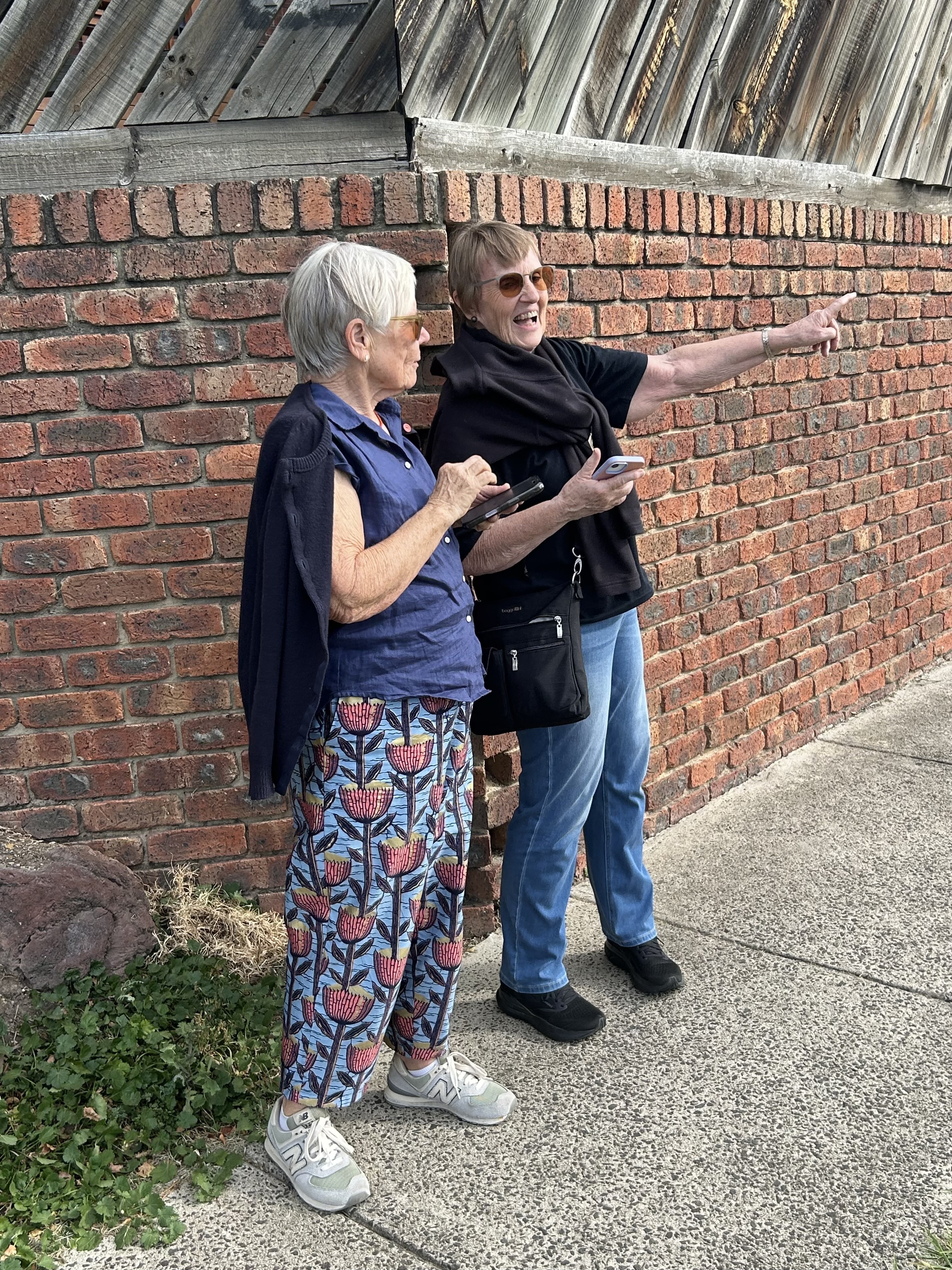
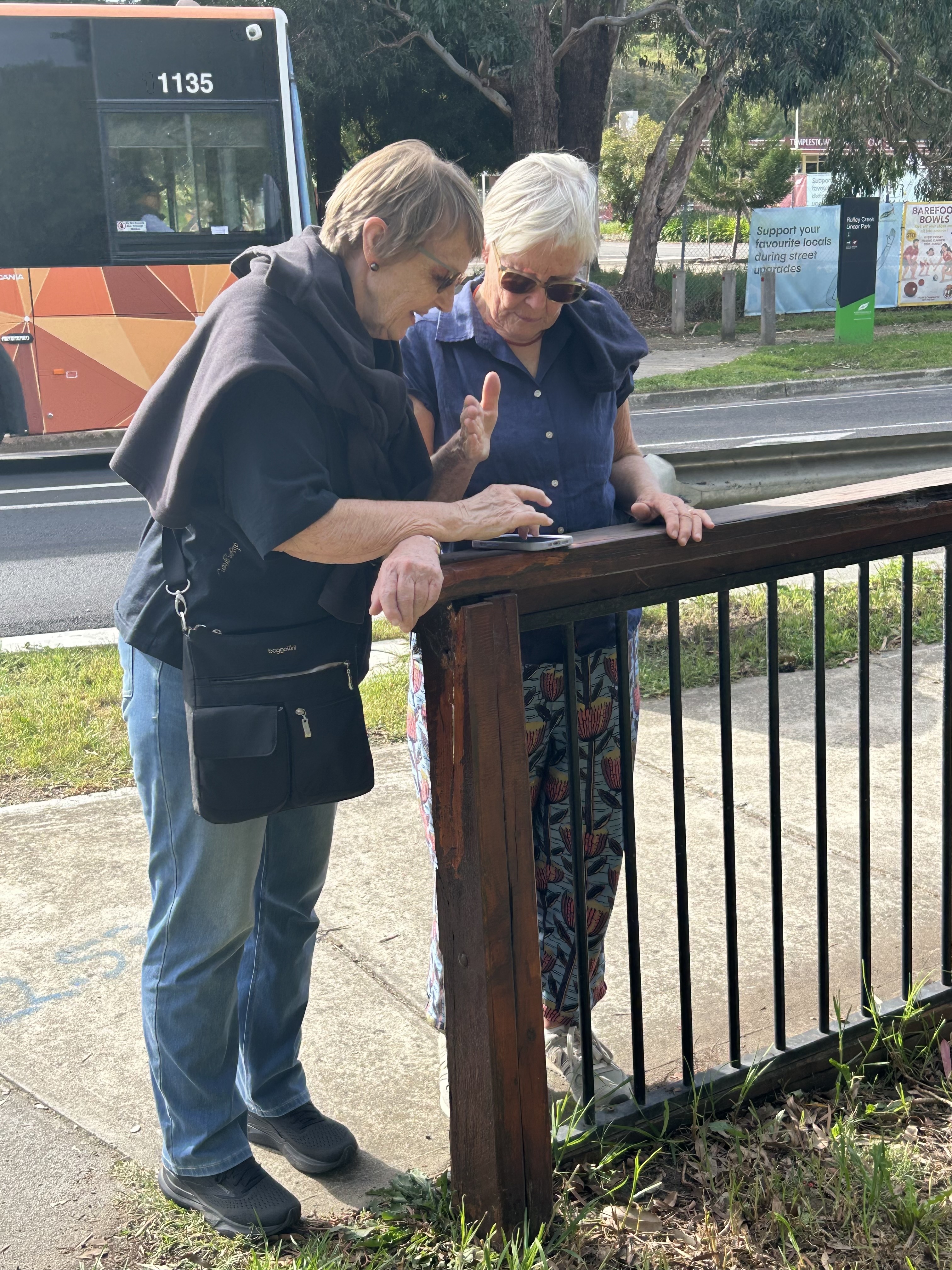
Eventually we worked out the right way, and soon we were standing looking, across four lanes of traffic at the area where the house would have been. There are a few candidates for the exact spot, but it was more or less here:
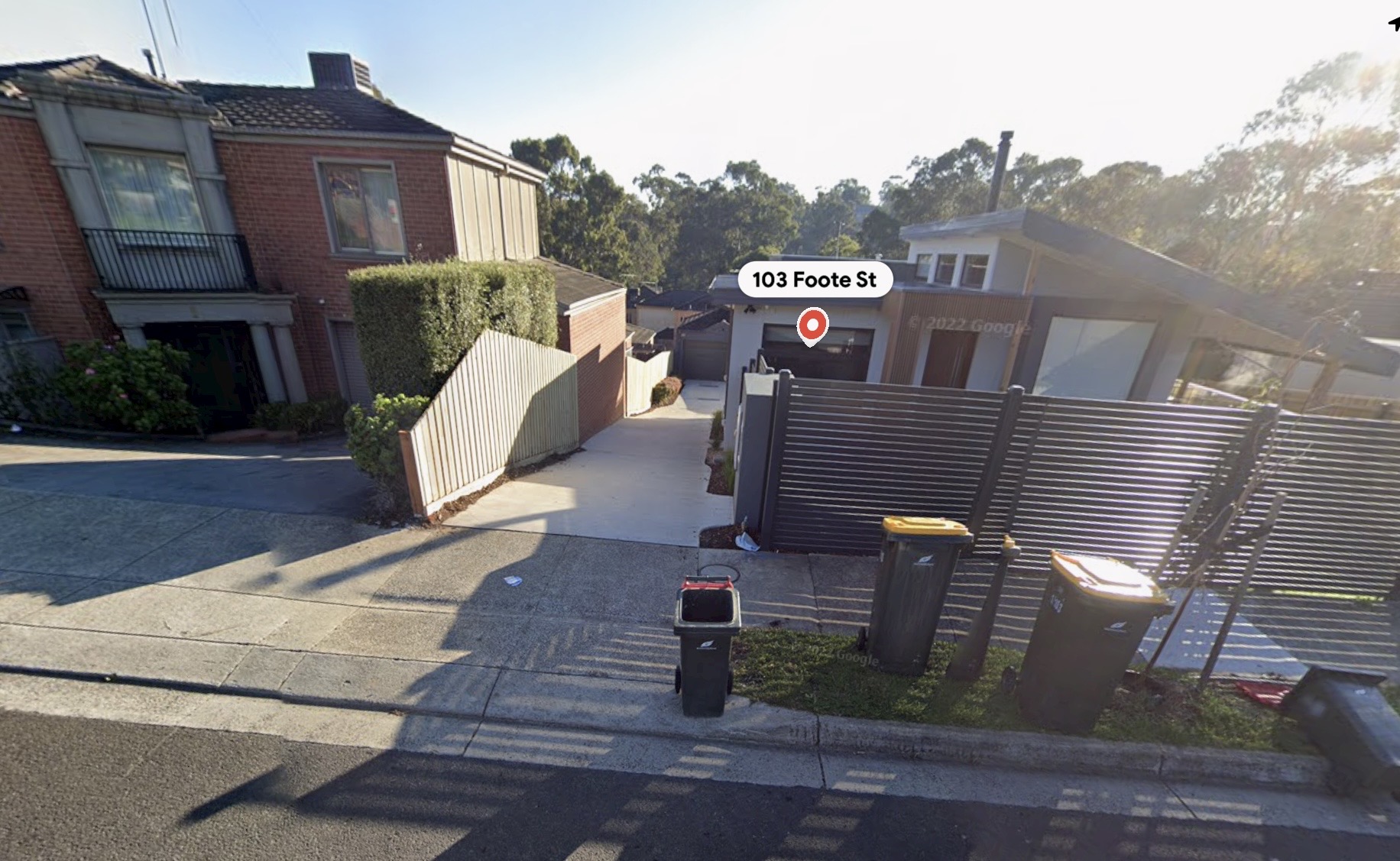
Because we are elderly, Susan made us cross at the lights. We set off to work our way round to the bottom of the hill.
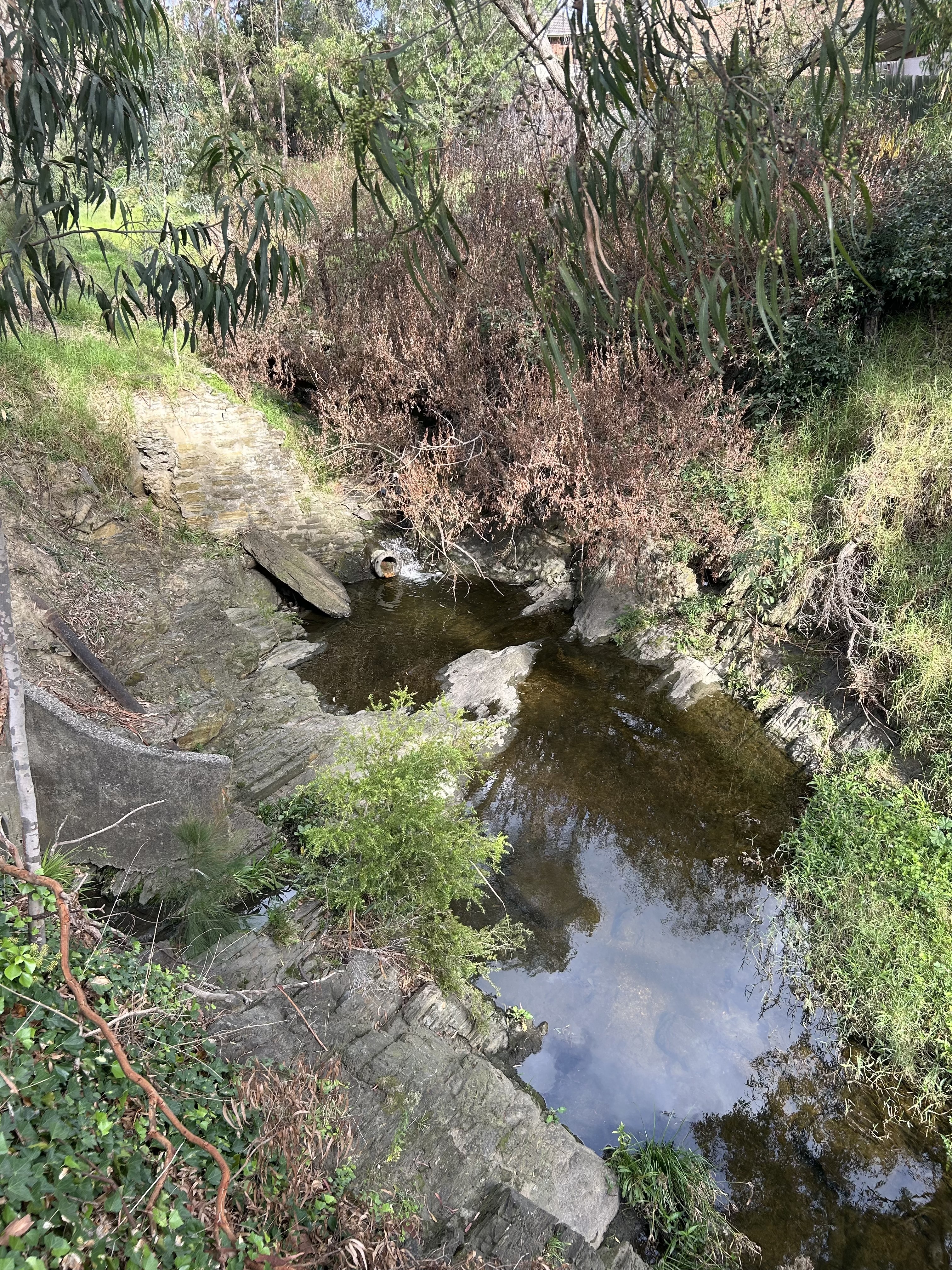
There is a new bridge, but we discovered the remnants of the old bridge, which must be one Sue remembers walking across with our Grandfather.
It was tucked in among the weeds.
We retraced our steps and, back home, Sue rummaged through the family photograph box and found a photo of the house:
My new special friend, Claude, from the house of Anthropic, couldn’t find any references to Alfred and Alfreda buying or selling the property, but he did find them “a charmingly matched pair”, and suggested many rabbit holes down which we could search.
There had been early settlers on the rich river flats along the Yarra River since the 1830s. The land was cleared, and large estates established.
By 1920, the first subdivisions were occurring, and more orchards and smaller farms sprang up.
This map of the area shows the early subdivision of the “Carlton Estate, across the road from where Alf and Alfreda bought their land. The red dot is their eventual property:
At the end of the Second World War in 1945, an increase in migration, and the return of servicemen brought about a housing boom. This was most pronounced in suburbs like Doncaster/Templestowe and Box Hill, where our own parents bought land. Council rating systems encouraged the suburbanisation of what had been farming land and orchards. Housing estates and supermarkets took over.
It was in this phase of development that Alf and Alfreda bought their block. They must have watched neighbouring Doncaster’s orchards disappearing, and the new suburb expanding east to their little haven.
From 1950 to 1960, the population of Doncaster/Templestowe increased from 5000 to 15000. By then Alf and Alfreda, spooked by the encroaching suburbia, had sold up and moved.
Journey to Templestowe
We have few memories of the Templestowe house, but, one that looms large, is of one of the journeys there. It seemed a long way. We remember it as a journey on narrow dirt roads that wound their way through orchards and paddocks The area was not easily accessed by public transport, but luckily we had a car.
Our first car was a black Sunbeam with large sweeping mudguards and running boards. It was a soft top with side curtains, a classic vintage car, and a very imposing presence in the garage. Maybe that is why, three or four year old Margaret, at Sunday School, enthusiastically sang the children’s hymn ‘Jesus Wants Me For A Sunbeam’, never questioning why Jesus may have wanted her for a car.
The cream Talbot replaced the Sunbeam. It was a large, very square, solid car, with wind up and down windows instead of draughty side curtains.
One memorable journey to Templestowe involved the Talbot. The route from Wattle Park to Templestowe was much the same as would be today: down Station Street, through Box Hill shopping centre, across Whitehorse Road to Tram Road, and up the big hill towards Doncaster. The route may be the same, but of course much has changed.
It took a little while to solve the puzzle of “White’s Corner.” Were our memories correct and why was it called Whites Corner? This intersection is now a major residential and shopping precinct. Westfield Shopping centre sprawls across one corner blocking what was once an expansive view of orchards and is now suburban Doncaster. On the other corners are clusters of multi storey apartment blocks and the intersection has been simplified to cope with the traffic and facilitate the growth.
White's corner now:
White's corner then:
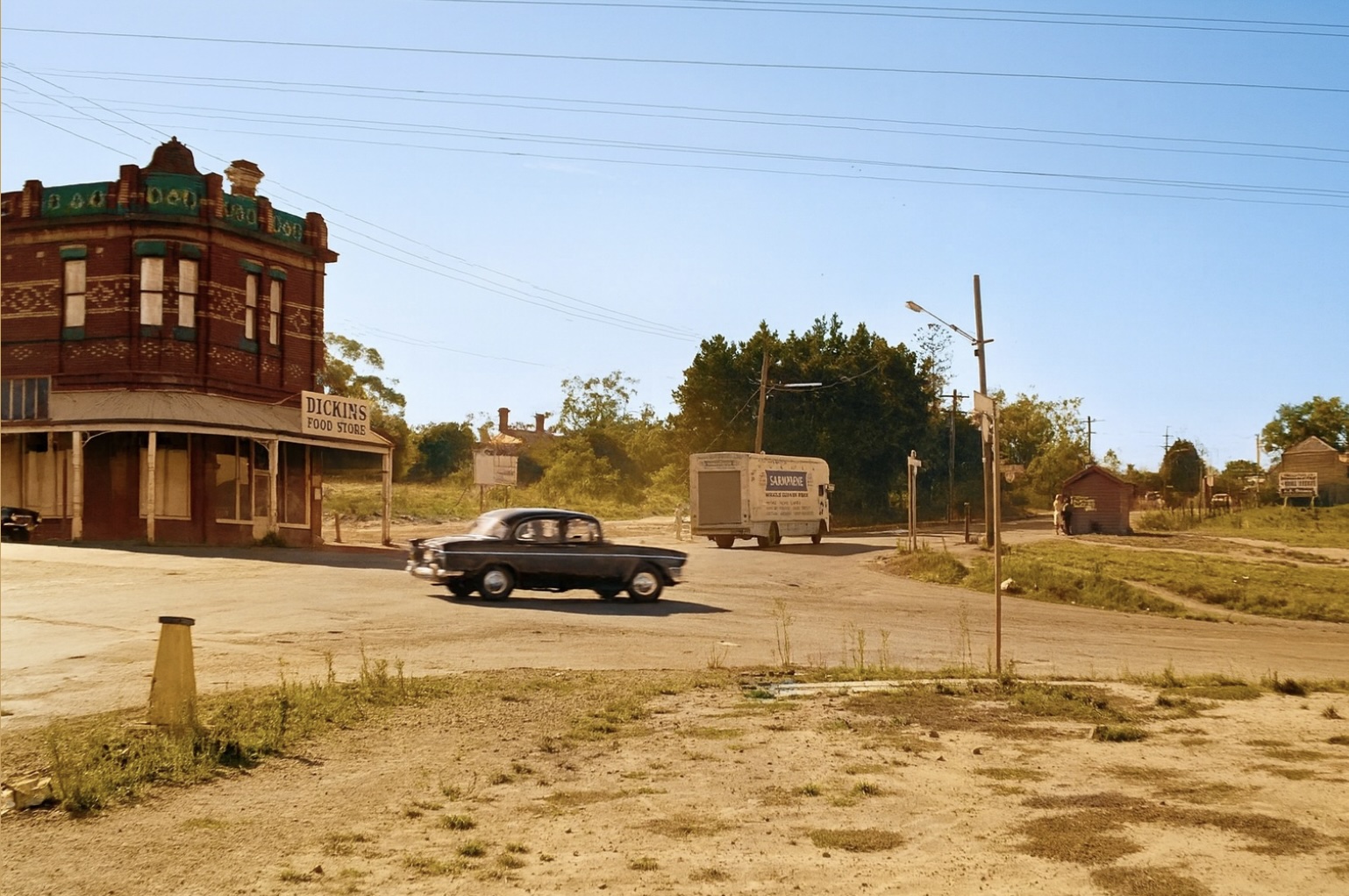
We remember it as a straight crossroad but I can find no images that match my memory exactly. Puzzle solved! it was always a three way intersection of three roads: Tram Road, which becomes Williamson Road, Elgar Road and Doncaster road. Memory is not always an entirely reliable source. From our position beside the broken down car, we would not have seen Tram Road.
I remember the lop sided car and a hotel or store where we asked for help on that windy, isolated corner. Margaret on the other hand, remembers the donkey or small horse, an ungulate anyway. No doubt small Margaret was being amused or distracted as we waited for Mr McAlpine, a neighbour, to tow us home. .
Maybe the building at the corner we remember was the store, originally Serpell’s Store, which was, at a later date, rented by a gentleman TM White, hence the name of the corner.
The broken axle at White’s Corner looms large in our childhood memories but all ended well and we presume the Talbot axle was replaced, almost certainly by Jim, and we were mobile once more.
blog comments powered by Disqus