
June 2026
Excursion to Templestowe
16 06 26 14:27 Filed in: Children 1950s
Sue and I both remember our grandparents’ Templestowe house. Sue even remembers walking from the house with our grandfather: down to the creek, across the bridge and up the other side.
For me the most memorable thing for both of us is their neighbour, a farmer, a woman about the same age as our grandparents. Why do we remember this? Because she had a prominent and impossible to ignore moustache!
They bought the Templestowe block, two acres on a hillside above the Yarra, in 1950. It had been part of a dairy farm, and still had on old cow shed or dairy and a dam on site.
We listened to Marge and Alice discussing the Templestowe House:
I looked it up on Google maps and was excited to find that, although the whole hillside is now covered in houses, the creek, which turns out to be Ruffey Creek, now has a walking track along side it.
It was clearly time for an excursion.
On a warm, sunny April afternoon, we set out, with our trusty driver, Jono.
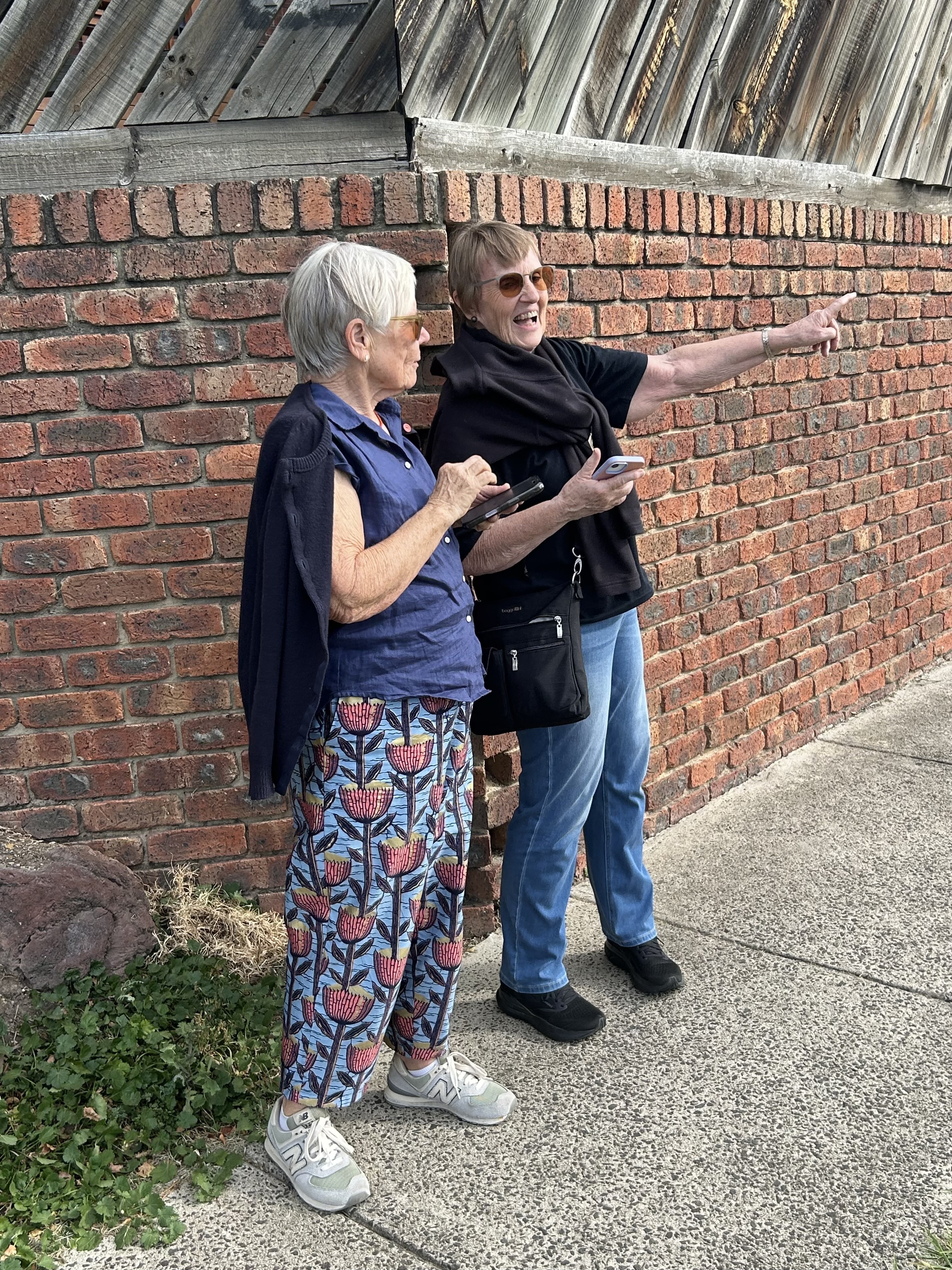
The single lane dirt road, Foote Street, on which our grandparent built, is now a busy highway, so we parked in a side street and set out along the Ruffey Creek walking track. It was weedy and neglected, but pleasant enough.
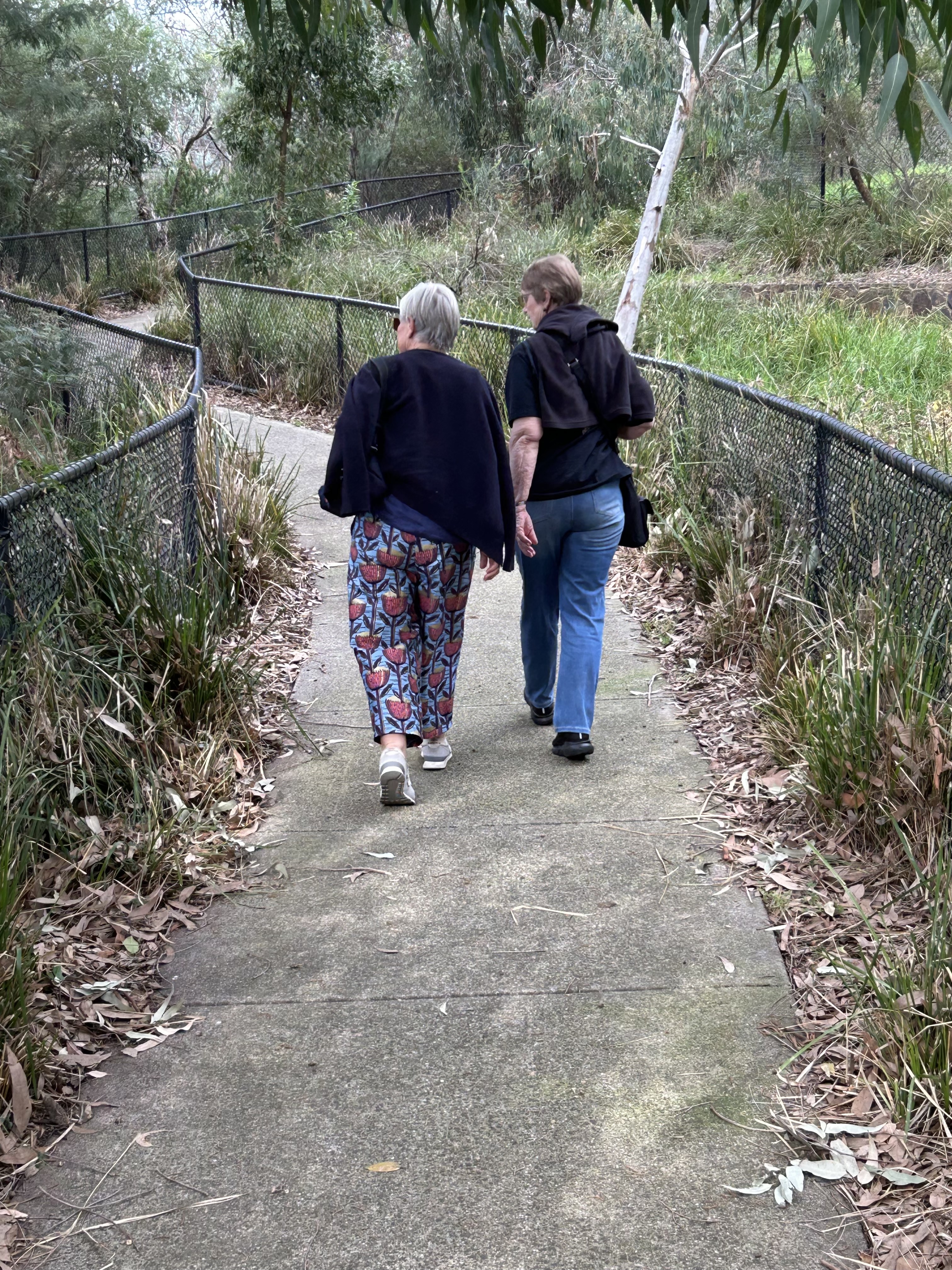
We realised that were walking where the moustache lady’s farm would have been. The track is not continuous, and we soon found ourselves at an intersection.
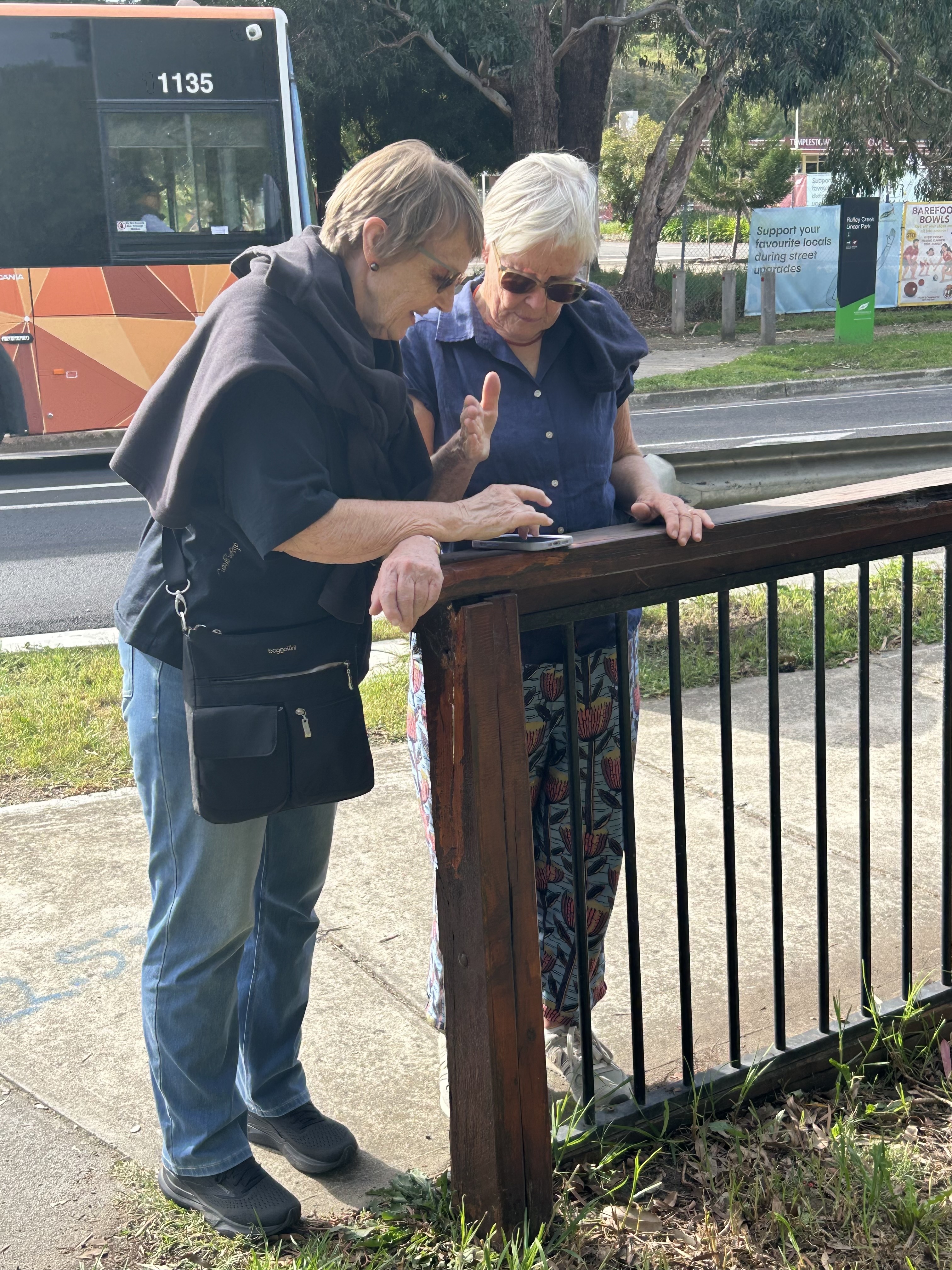
Navigation is not our family’s super power.
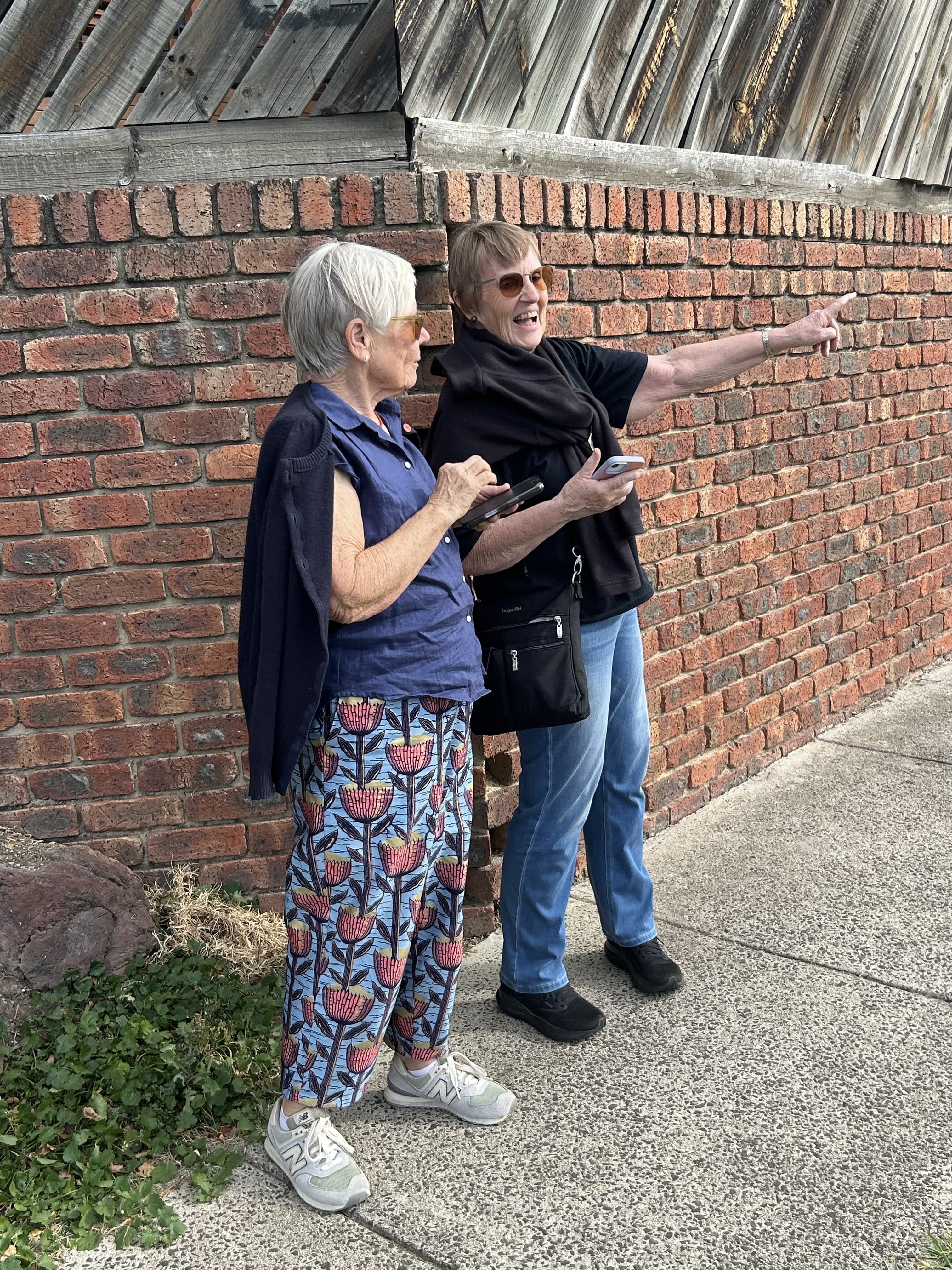
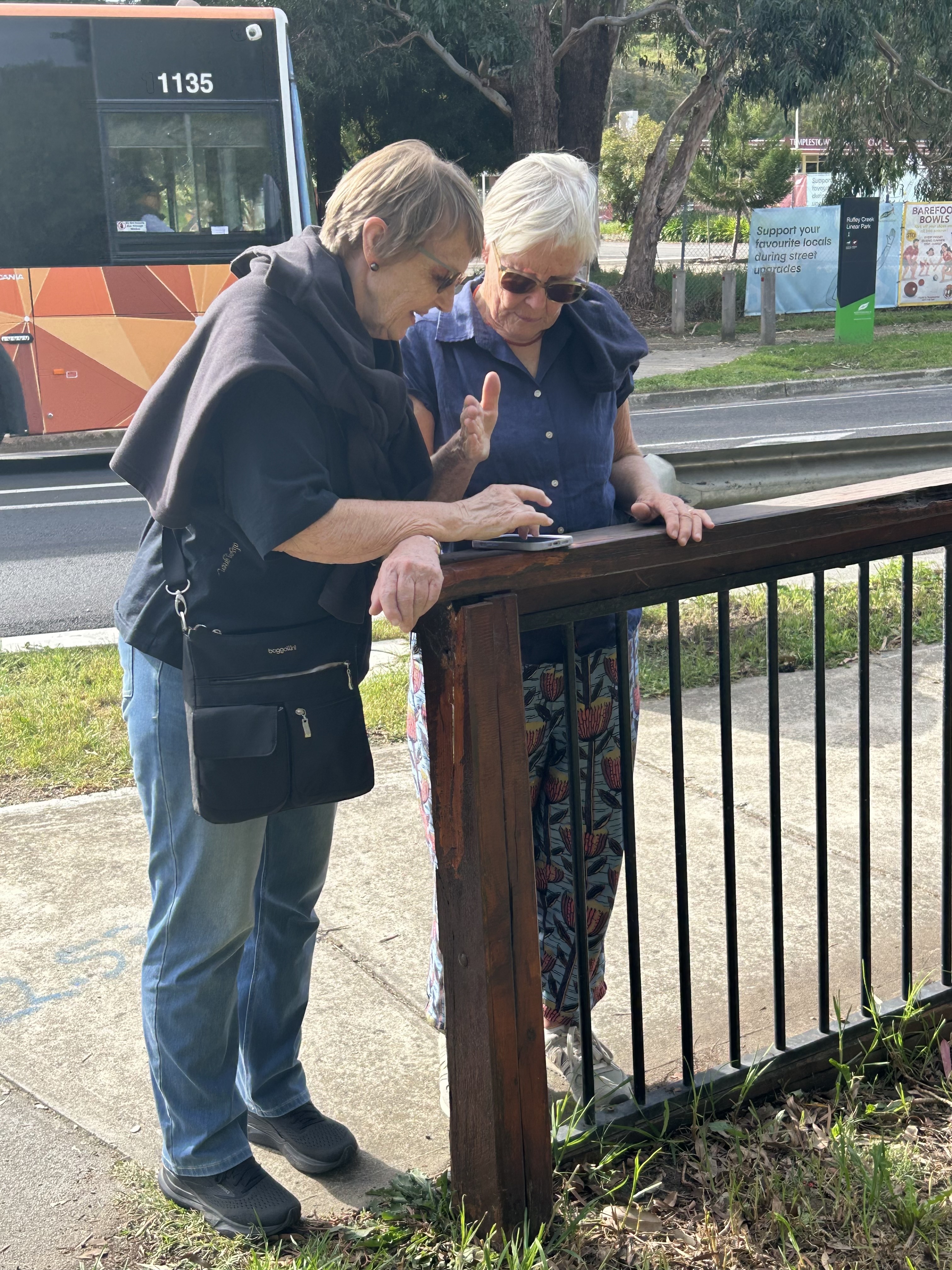
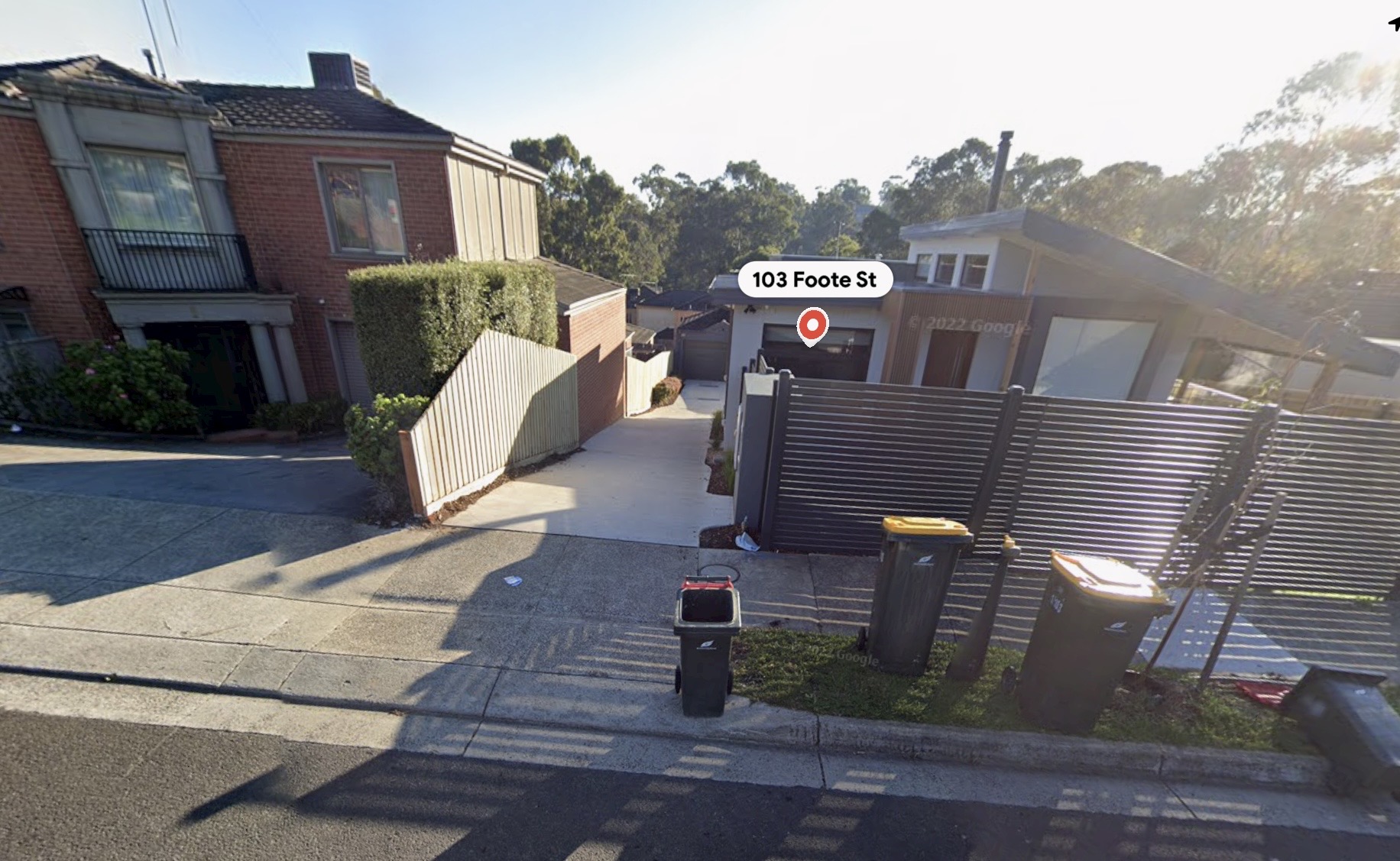
Eventually we worked out the right way, and soon we were standing looking, across four lanes of traffic at the area where the house would have been. There are a few candidates for the exact spot, but it was more or less here:
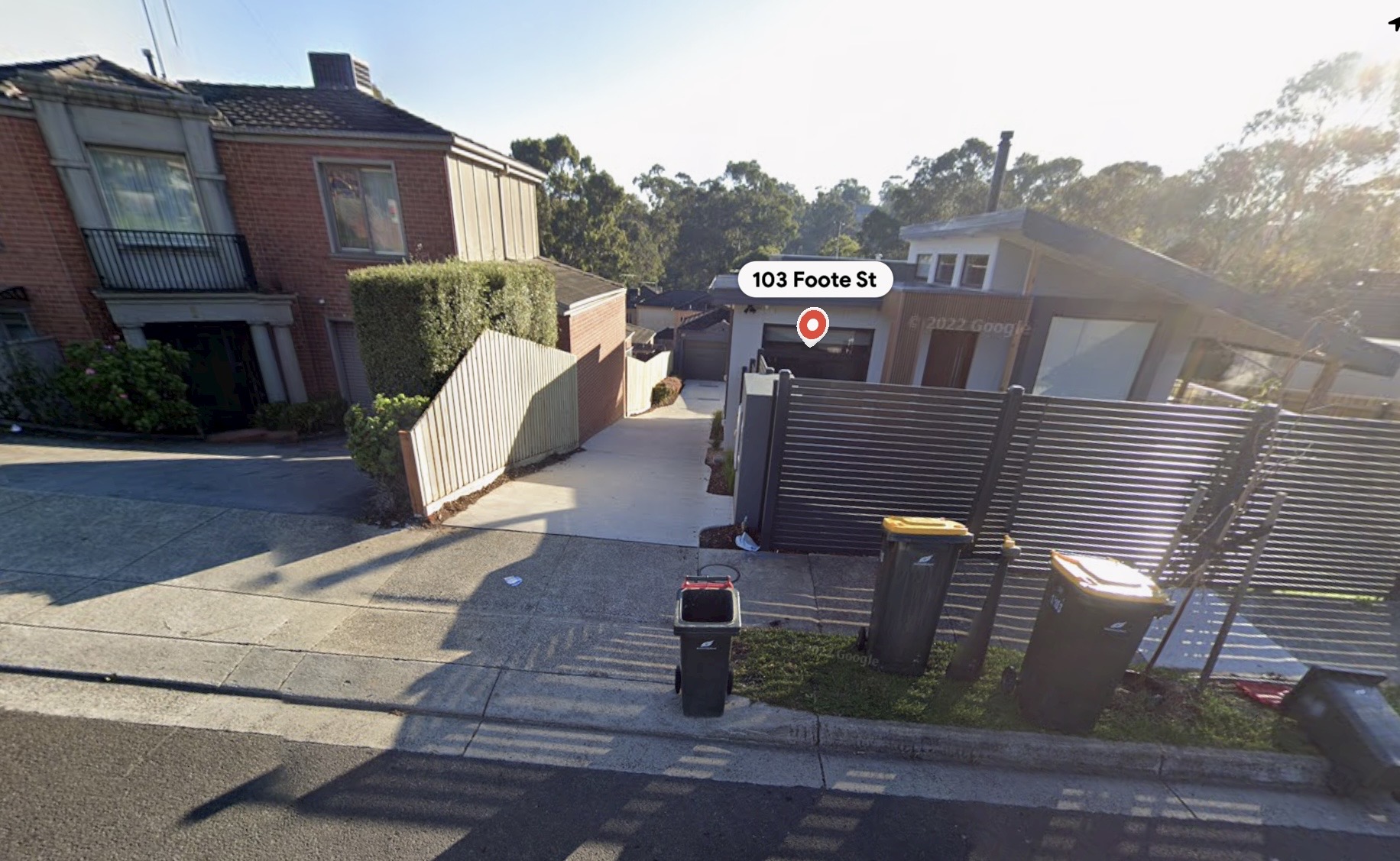
Because we are elderly, Susan made us cross at the lights. We set off to work our way round to the bottom of the hill.
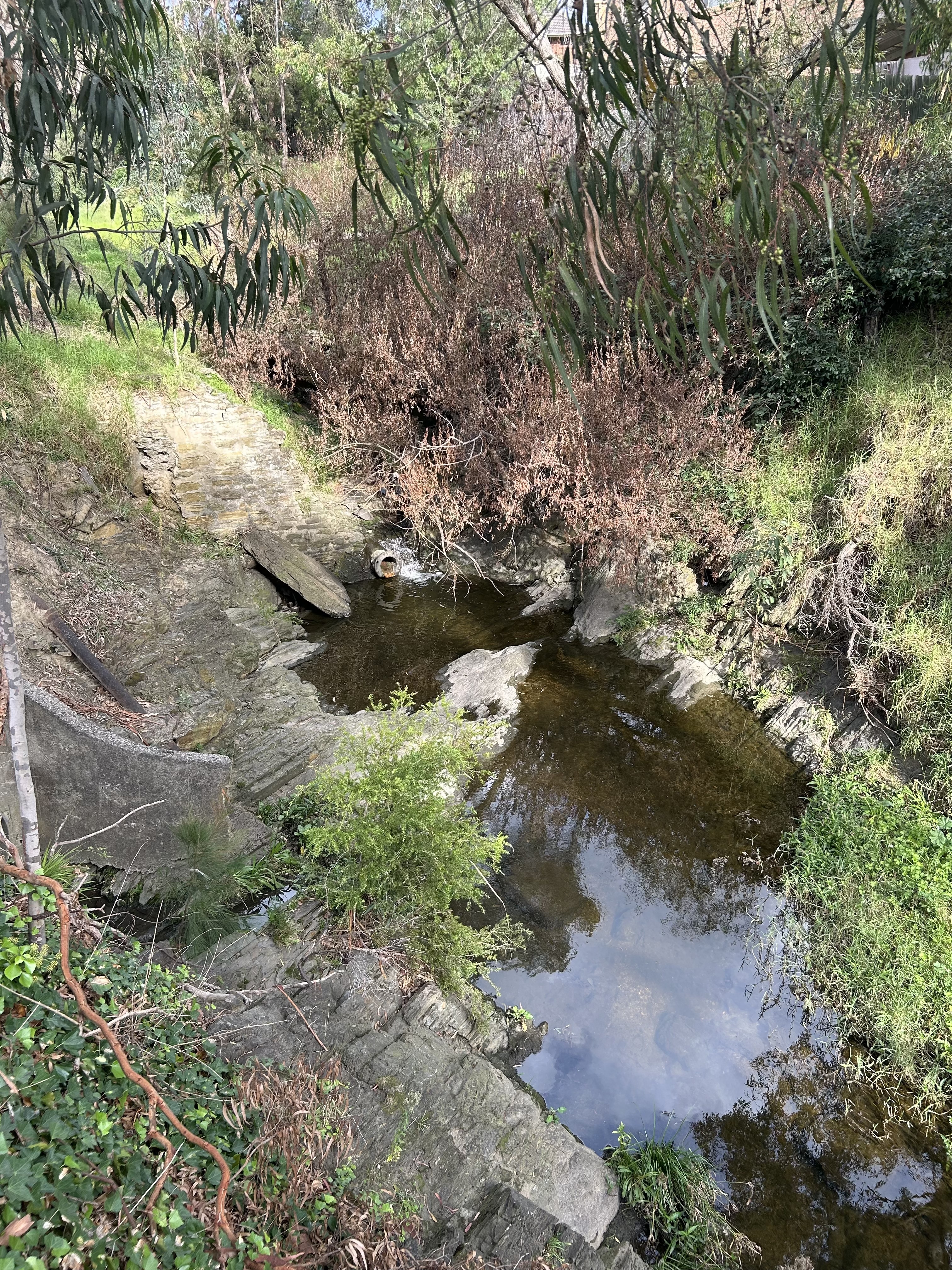
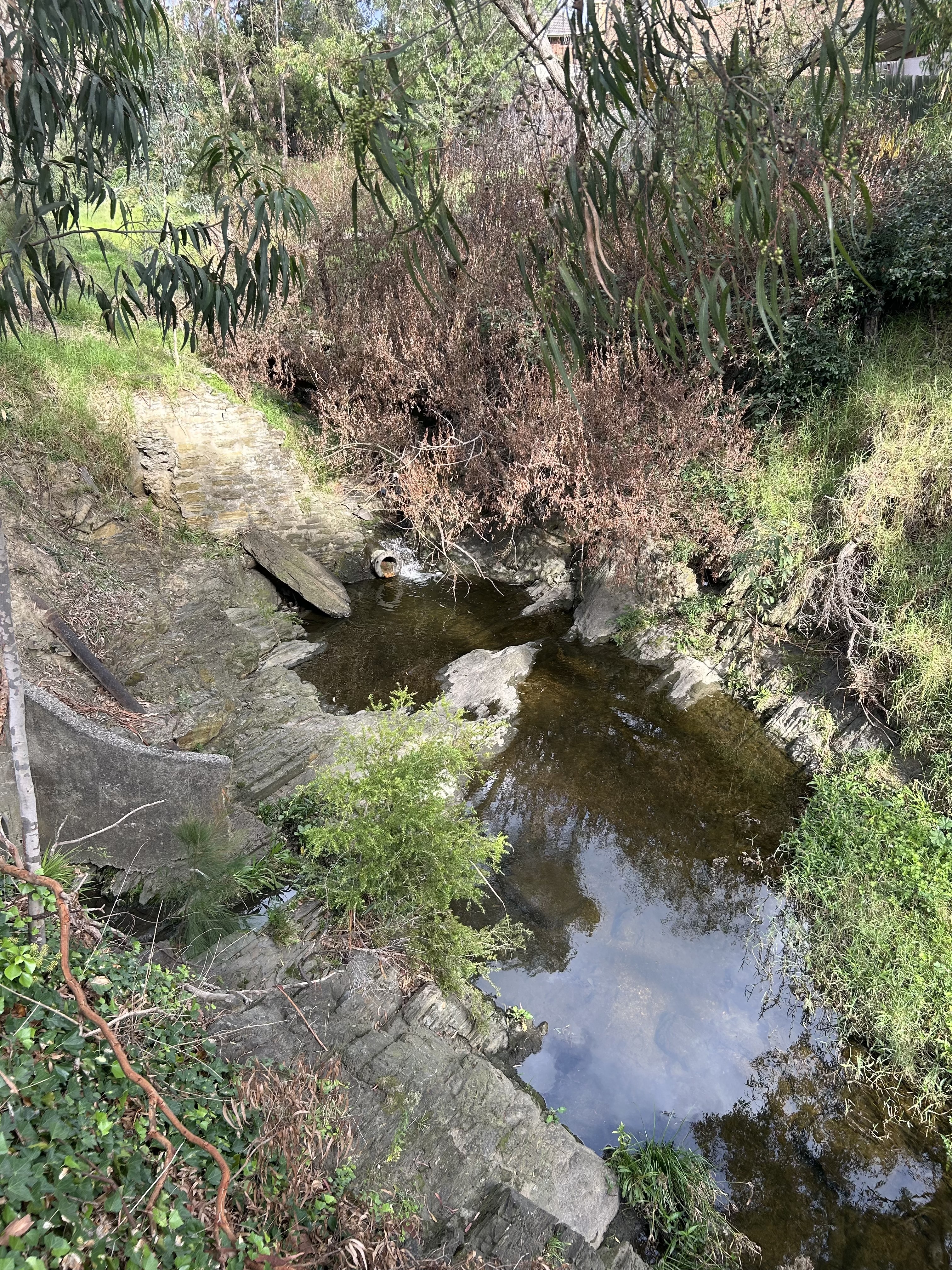
There is a new bridge, but we discovered the remnants of the old bridge, which must be one Sue remembers walking across with our Grandfather.
It was tucked in among the weeds.
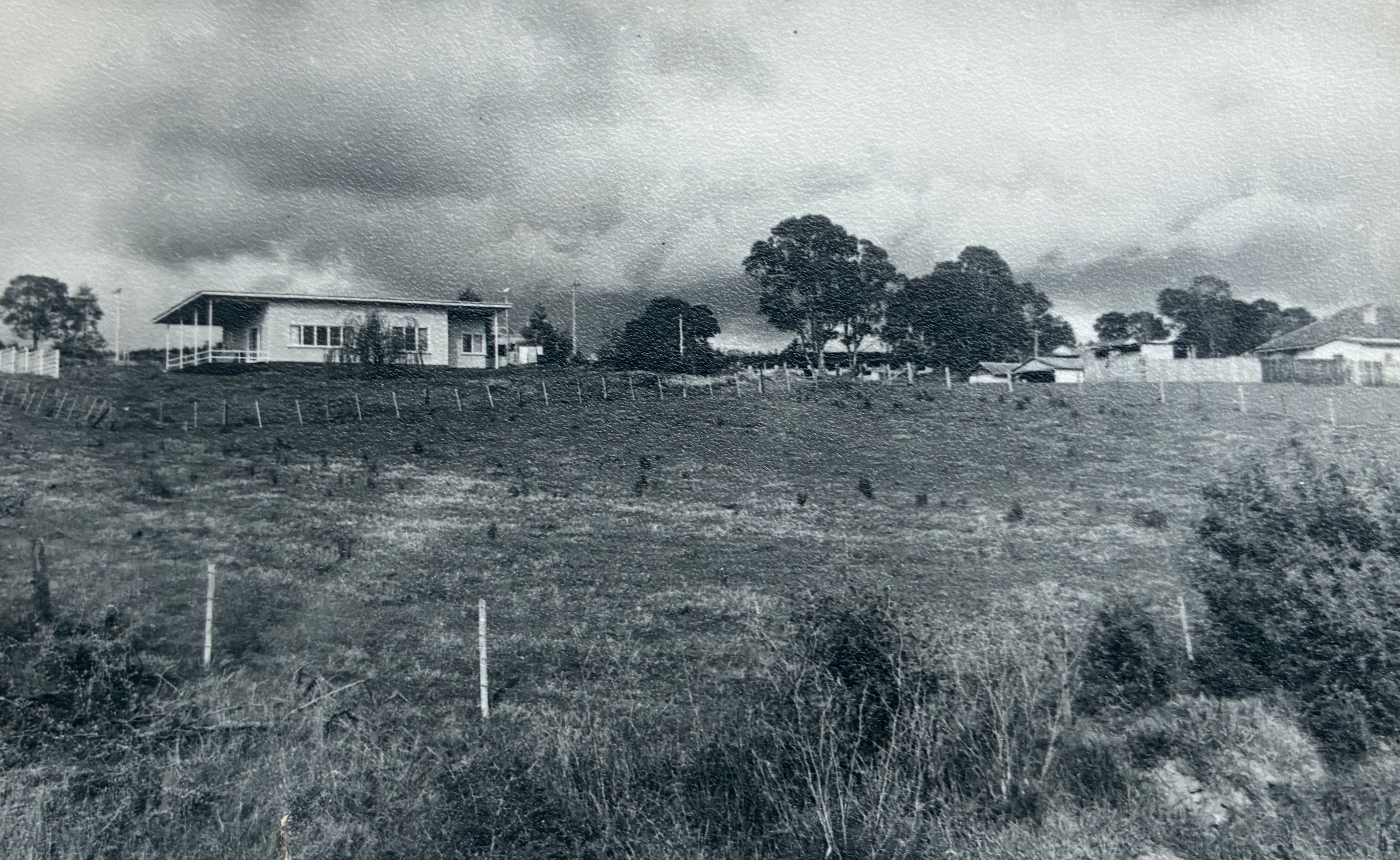
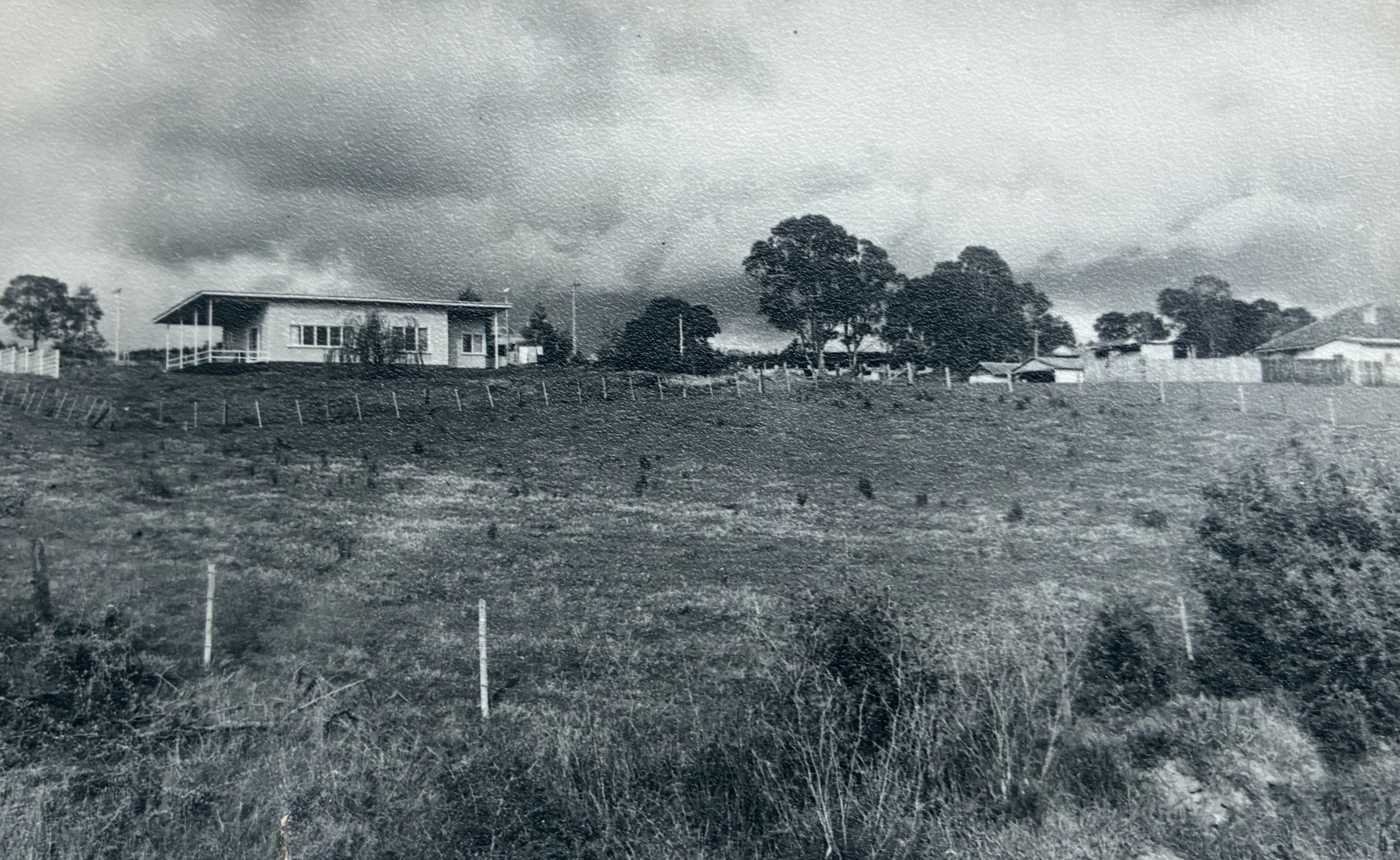
We retraced our steps and, back home, Sue rummaged through the family photograph box and found a photo of the house:
My new special friend, Claude, from the house of Anthropic, couldn’t find any references to Alfred and Alfreda buying or selling the property, but he did find them “a charmingly matched pair”, and suggested many rabbit holes down which we could search.
There had been early settlers on the rich river flats along the Yarra River since the 1830s. The land was cleared, and large estates established.
By 1920, the first subdivisions were occurring, and more orchards and smaller farms sprang up.
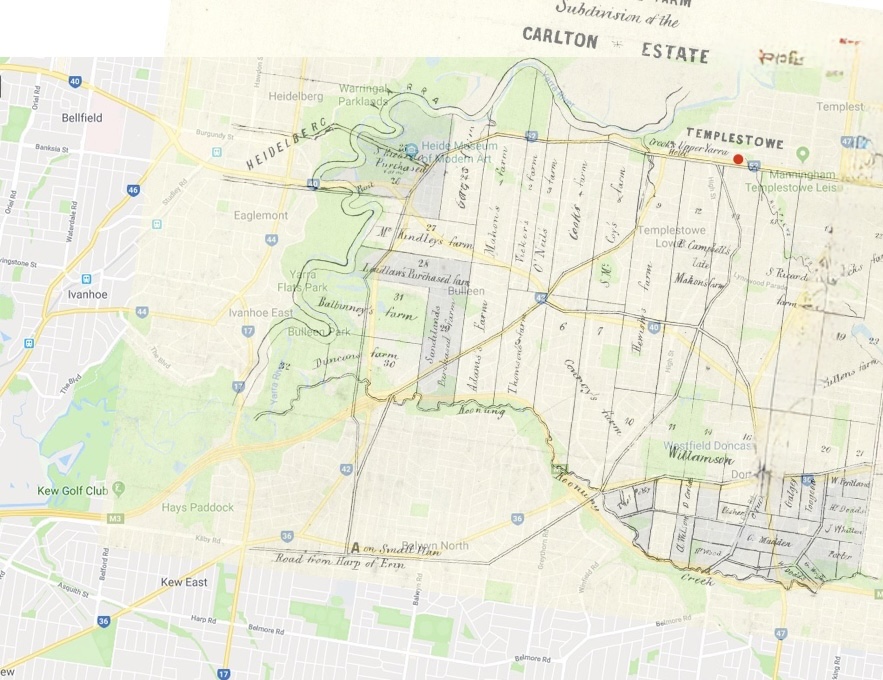
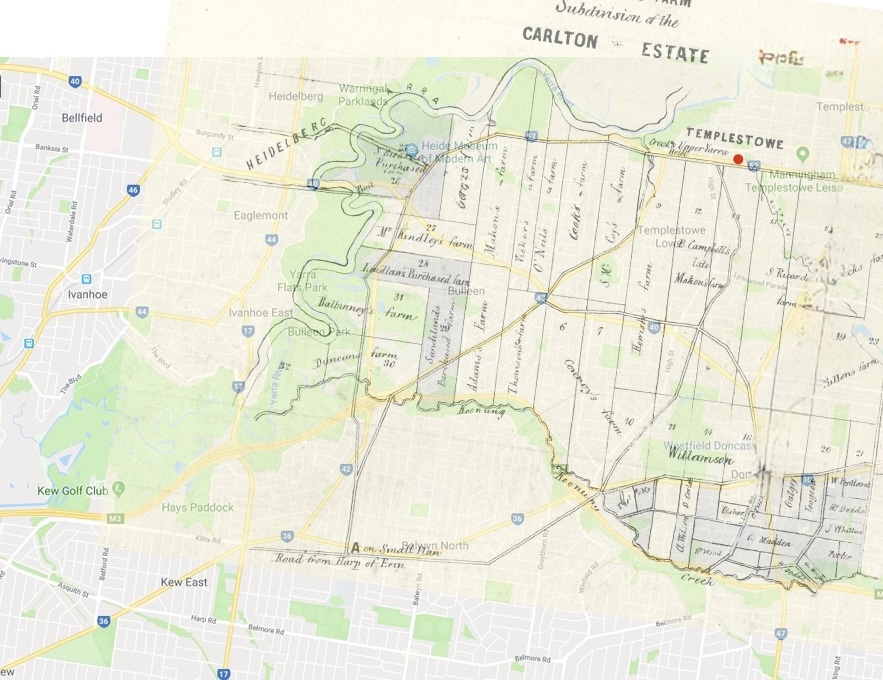
This map of the area shows the early subdivision of the “Carlton Estate, across the road from where Alf and Alfreda bought their land. The red dot is their eventual property:
At the end of the Second World War in 1945, an increase in migration, and the return of servicemen brought about a housing boom. This was most pronounced in suburbs like Doncaster/Templestowe and Box Hill, where our own parents bought land. Council rating systems encouraged the suburbanisation of what had been farming land and orchards. Housing estates and supermarkets took over.
It was in this phase of development that Alf and Alfreda bought their block. They must have watched neighbouring Doncaster’s orchards disappearing, and the new suburb expanding east to their little haven.
From 1950 to 1960, the population of Doncaster/Templestowe increased from 5000 to 15000. By then Alf and Alfreda, spooked by the encroaching suburbia, had sold up and moved.
Journey to Templestowe
We have few memories of the Templestowe house, but, one that looms large, is of one of the journeys there. It seemed a long way. We remember it as a journey on narrow dirt roads that wound their way through orchards and paddocks The area was not easily accessed by public transport, but luckily we had a car.
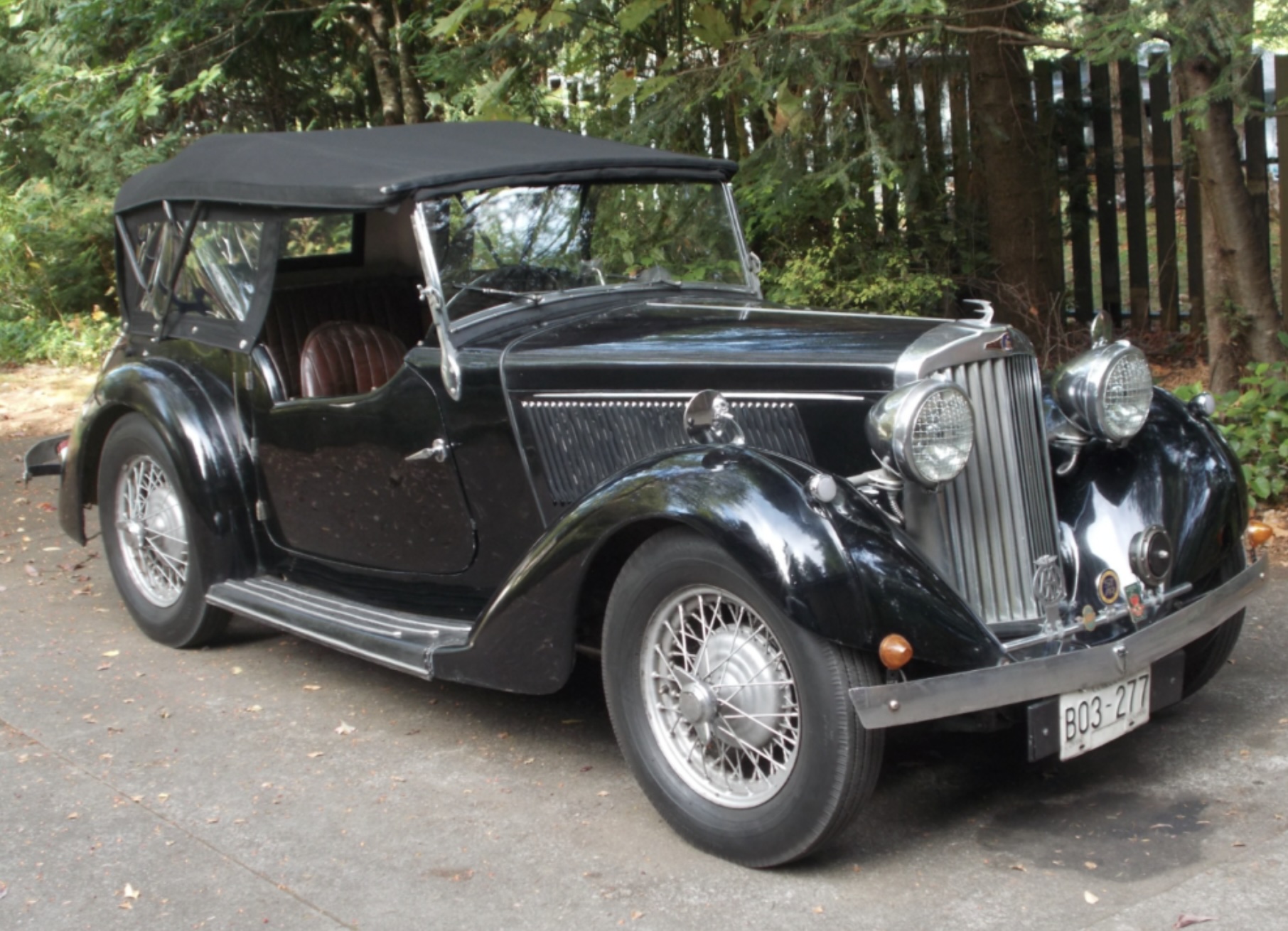
Our first car was a black Sunbeam with large sweeping mudguards and running boards. It was a soft top with side curtains, a classic vintage car, and a very imposing presence in the garage. Maybe that is why, three or four year old Margaret, at Sunday School, enthusiastically sang the children’s hymn ‘Jesus Wants Me For A Sunbeam’, never questioning why Jesus may have wanted her for a car.
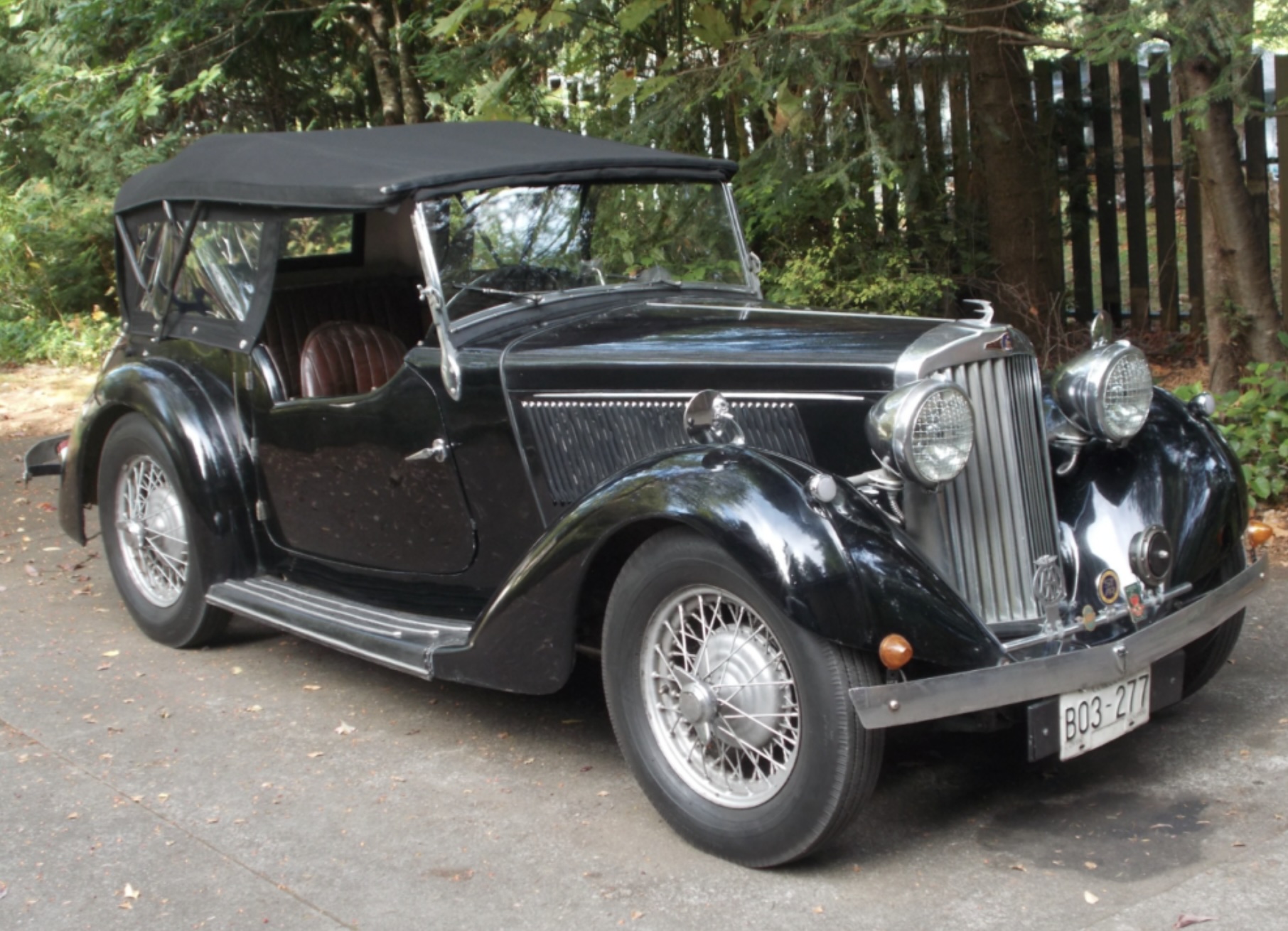
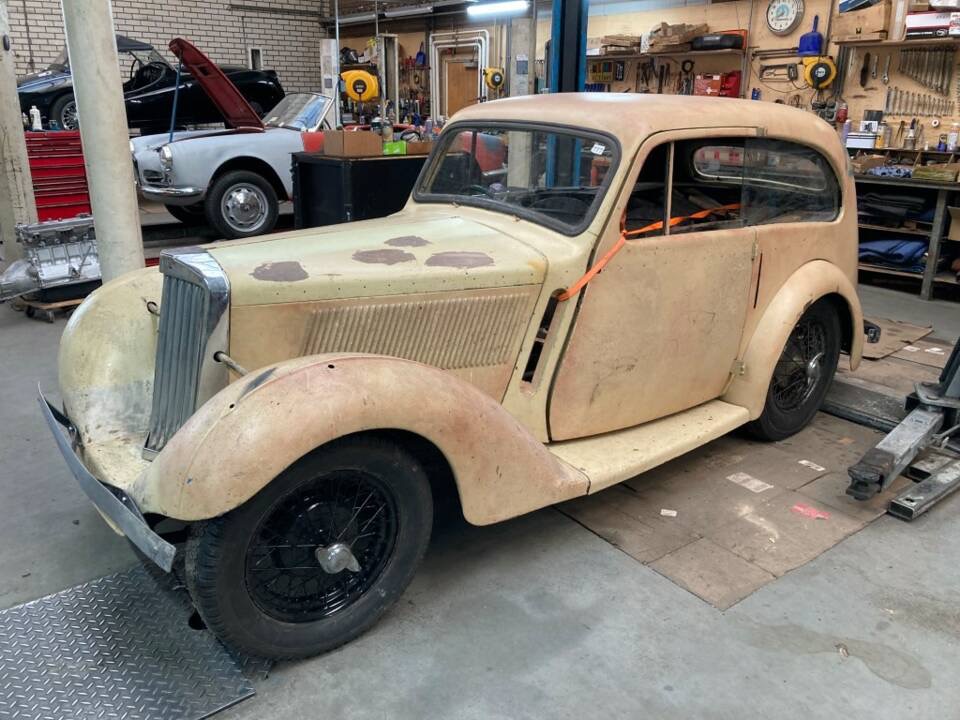
The cream Talbot replaced the Sunbeam. It was a large, very square, solid car, with wind up and down windows instead of draughty side curtains.
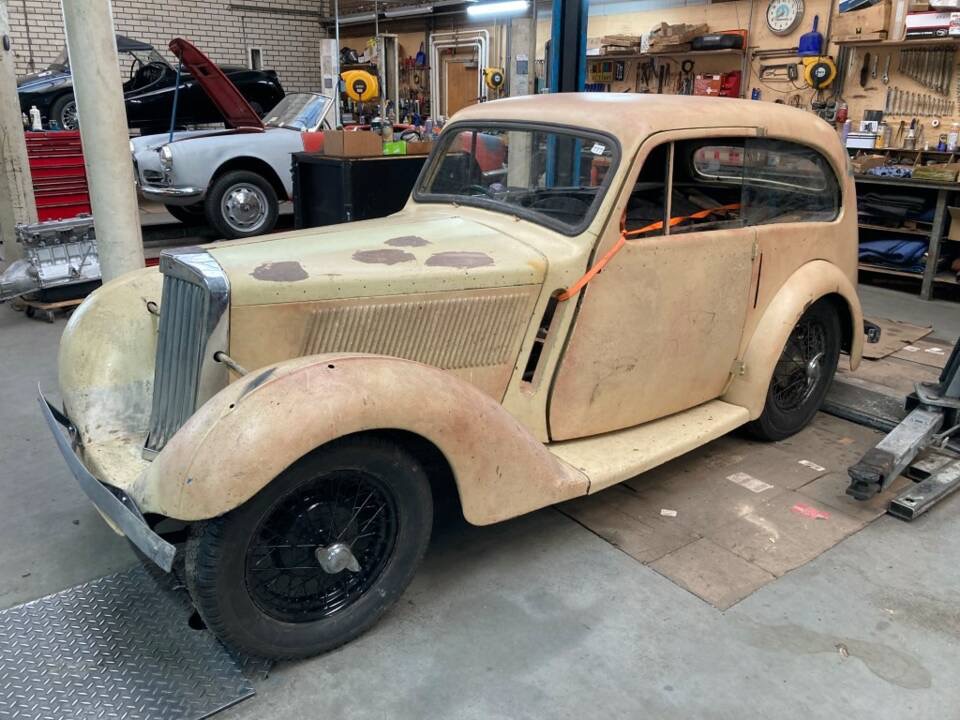
One memorable journey to Templestowe involved the Talbot. The route from Wattle Park to Templestowe was much the same as would be today: down Station Street, through Box Hill shopping centre, across Whitehorse Road to Tram Road, and up the big hill towards Doncaster. The route may be the same, but of course much has changed.
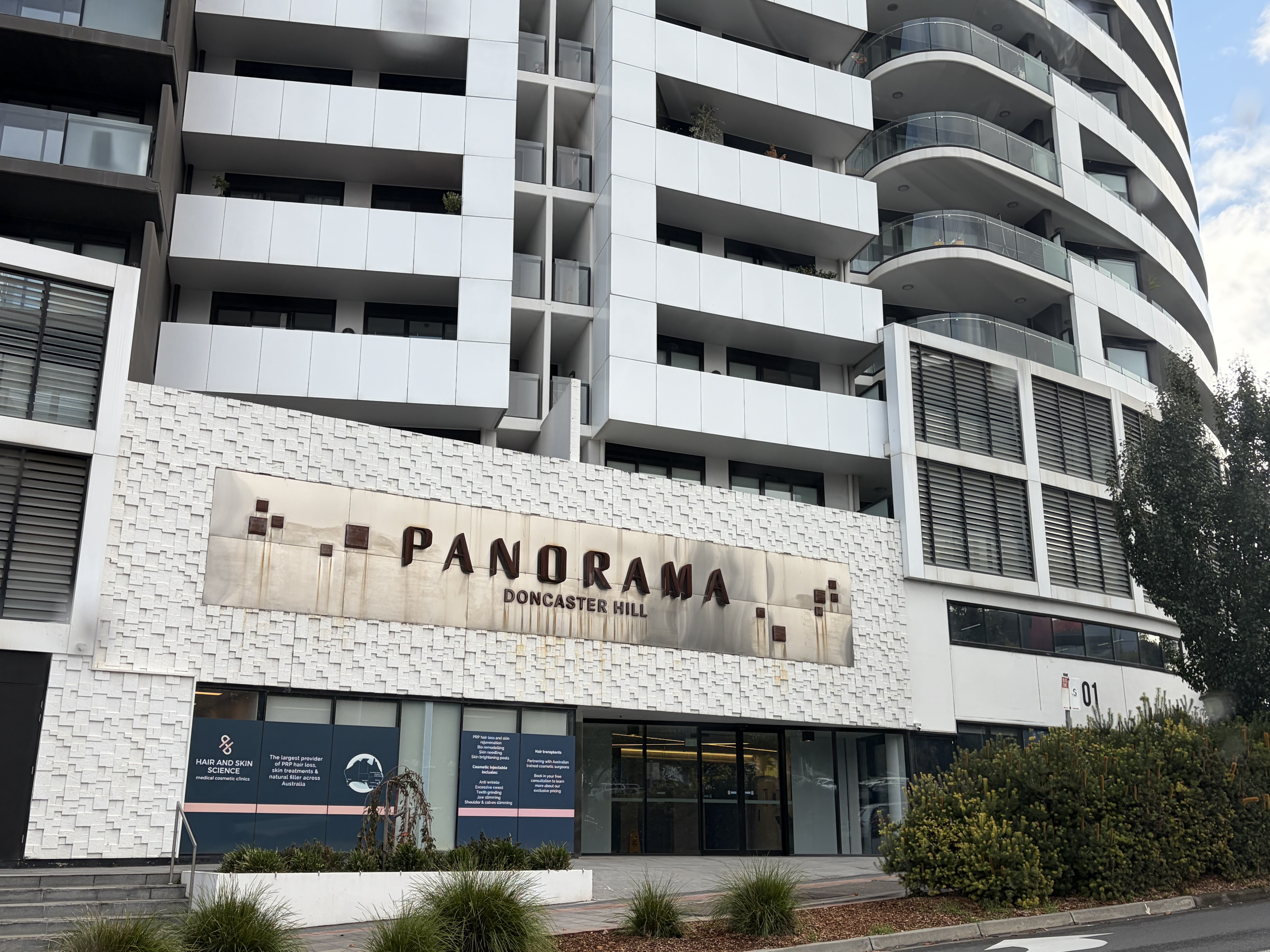
It took a little while to solve the puzzle of “White’s Corner.” Were our memories correct and why was it called Whites Corner? This intersection is now a major residential and shopping precinct. Westfield Shopping centre sprawls across one corner blocking what was once an expansive view of orchards and is now suburban Doncaster. On the other corners are clusters of multi storey apartment blocks and the intersection has been simplified to cope with the traffic and facilitate the growth.
White's corner now:
White's corner then:
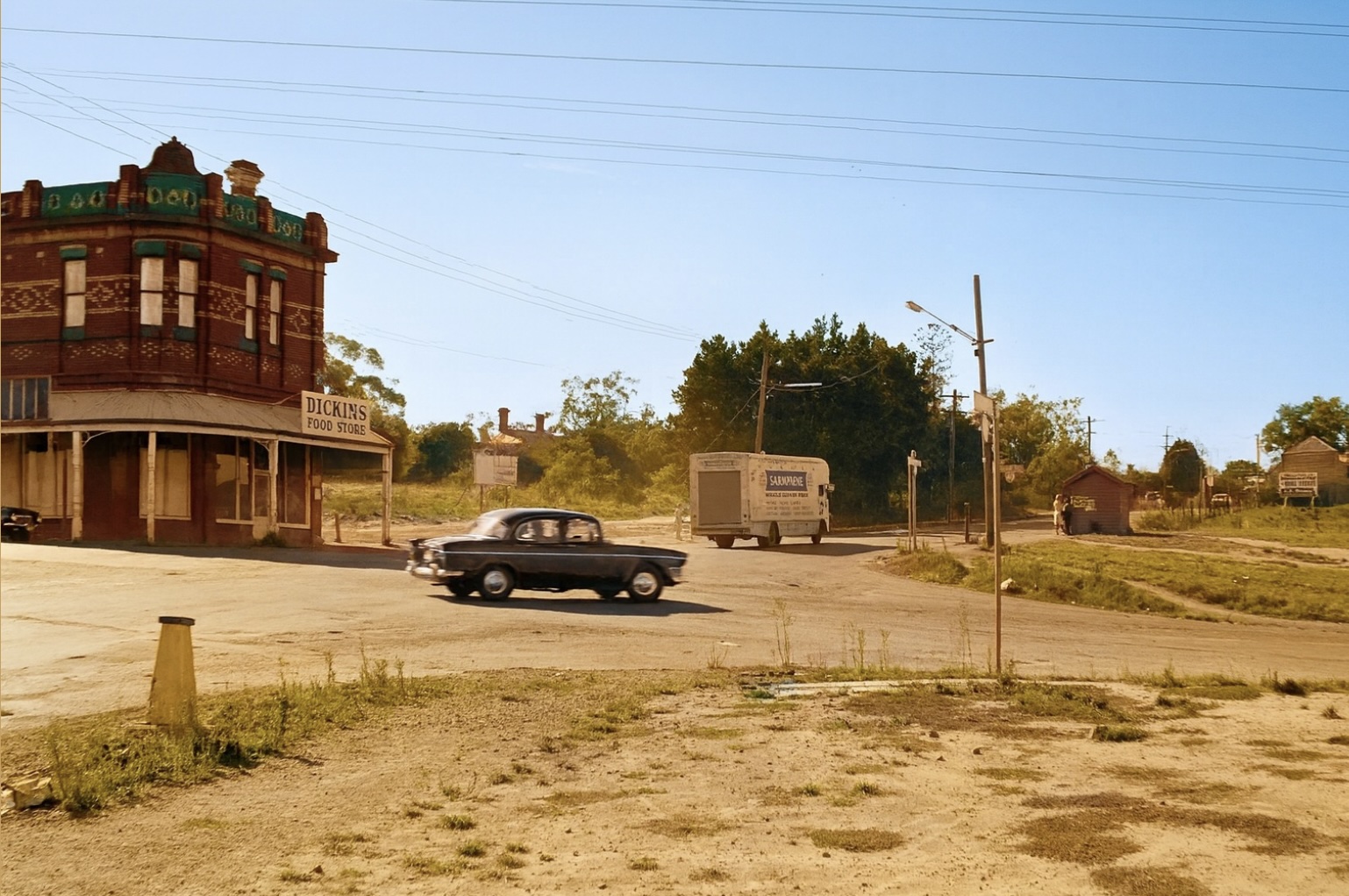
We remember it as a straight crossroad but I can find no images that match my memory exactly. Puzzle solved! it was always a three way intersection of three roads: Tram Road, which becomes Williamson Road, Elgar Road and Doncaster road. Memory is not always an entirely reliable source. From our position beside the broken down car, we would not have seen Tram Road.
I remember the lop sided car and a hotel or store where we asked for help on that windy, isolated corner. Margaret on the other hand, remembers the donkey or small horse, an ungulate anyway. No doubt small Margaret was being amused or distracted as we waited for Mr McAlpine, a neighbour, to tow us home. .
Maybe the building at the corner we remember was the store, originally Serpell’s Store, which was, at a later date, rented by a gentleman TM White, hence the name of the corner.
The broken axle at White’s Corner looms large in our childhood memories but all ended well and we presume the Talbot axle was replaced, almost certainly by Jim, and we were mobile once more.
For me the most memorable thing for both of us is their neighbour, a farmer, a woman about the same age as our grandparents. Why do we remember this? Because she had a prominent and impossible to ignore moustache!
They bought the Templestowe block, two acres on a hillside above the Yarra, in 1950. It had been part of a dairy farm, and still had on old cow shed or dairy and a dam on site.
We listened to Marge and Alice discussing the Templestowe House:
I looked it up on Google maps and was excited to find that, although the whole hillside is now covered in houses, the creek, which turns out to be Ruffey Creek, now has a walking track along side it.
It was clearly time for an excursion.
On a warm, sunny April afternoon, we set out, with our trusty driver, Jono.
The single lane dirt road, Foote Street, on which our grandparent built, is now a busy highway, so we parked in a side street and set out along the Ruffey Creek walking track. It was weedy and neglected, but pleasant enough.
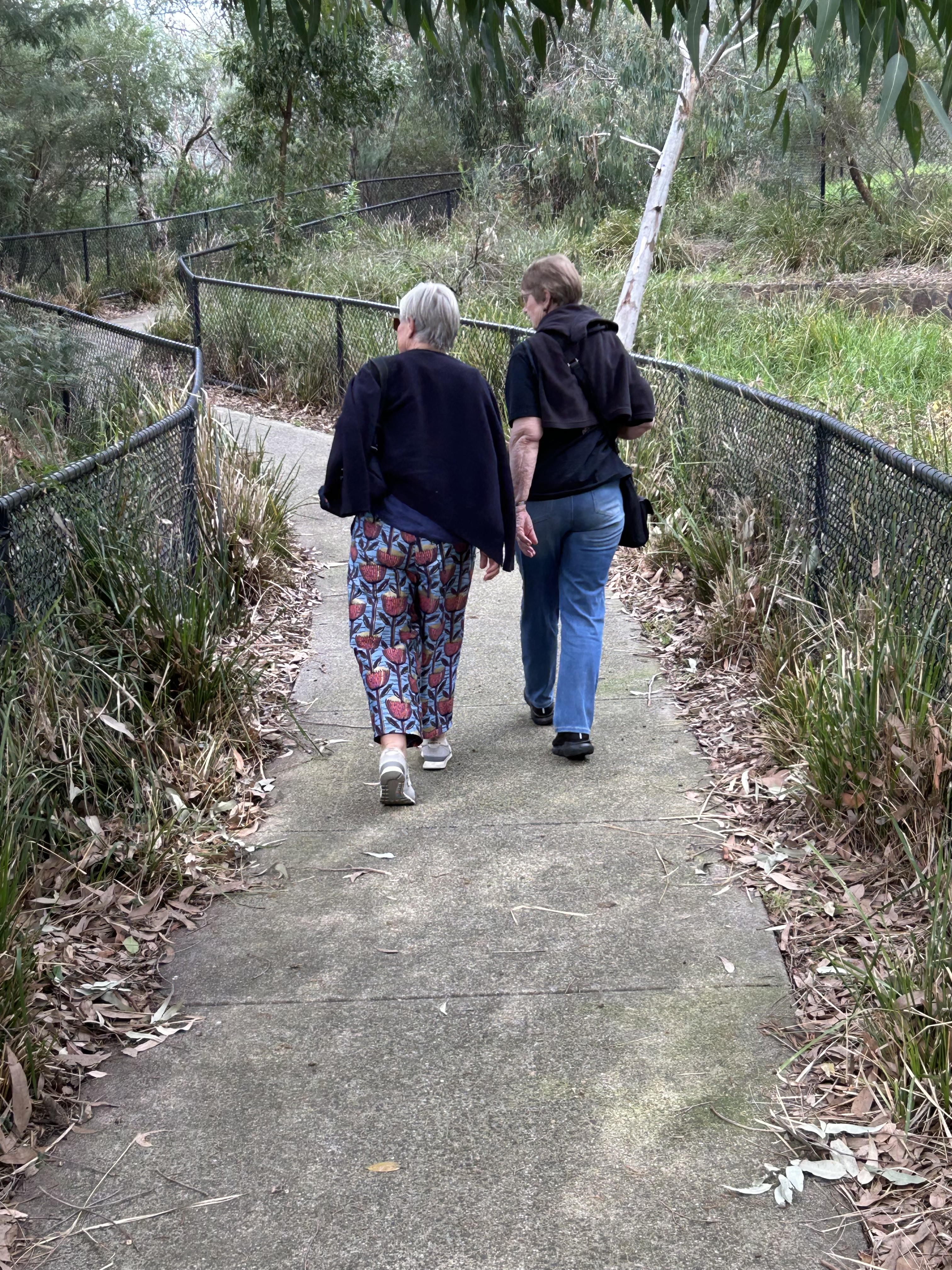
We realised that were walking where the moustache lady’s farm would have been. The track is not continuous, and we soon found ourselves at an intersection.
Navigation is not our family’s super power.
Eventually we worked out the right way, and soon we were standing looking, across four lanes of traffic at the area where the house would have been. There are a few candidates for the exact spot, but it was more or less here:
Because we are elderly, Susan made us cross at the lights. We set off to work our way round to the bottom of the hill.
There is a new bridge, but we discovered the remnants of the old bridge, which must be one Sue remembers walking across with our Grandfather.
It was tucked in among the weeds.
We retraced our steps and, back home, Sue rummaged through the family photograph box and found a photo of the house:
My new special friend, Claude, from the house of Anthropic, couldn’t find any references to Alfred and Alfreda buying or selling the property, but he did find them “a charmingly matched pair”, and suggested many rabbit holes down which we could search.
There had been early settlers on the rich river flats along the Yarra River since the 1830s. The land was cleared, and large estates established.
By 1920, the first subdivisions were occurring, and more orchards and smaller farms sprang up.
This map of the area shows the early subdivision of the “Carlton Estate, across the road from where Alf and Alfreda bought their land. The red dot is their eventual property:
At the end of the Second World War in 1945, an increase in migration, and the return of servicemen brought about a housing boom. This was most pronounced in suburbs like Doncaster/Templestowe and Box Hill, where our own parents bought land. Council rating systems encouraged the suburbanisation of what had been farming land and orchards. Housing estates and supermarkets took over.
It was in this phase of development that Alf and Alfreda bought their block. They must have watched neighbouring Doncaster’s orchards disappearing, and the new suburb expanding east to their little haven.
From 1950 to 1960, the population of Doncaster/Templestowe increased from 5000 to 15000. By then Alf and Alfreda, spooked by the encroaching suburbia, had sold up and moved.
Journey to Templestowe
We have few memories of the Templestowe house, but, one that looms large, is of one of the journeys there. It seemed a long way. We remember it as a journey on narrow dirt roads that wound their way through orchards and paddocks The area was not easily accessed by public transport, but luckily we had a car.
Our first car was a black Sunbeam with large sweeping mudguards and running boards. It was a soft top with side curtains, a classic vintage car, and a very imposing presence in the garage. Maybe that is why, three or four year old Margaret, at Sunday School, enthusiastically sang the children’s hymn ‘Jesus Wants Me For A Sunbeam’, never questioning why Jesus may have wanted her for a car.
The cream Talbot replaced the Sunbeam. It was a large, very square, solid car, with wind up and down windows instead of draughty side curtains.
One memorable journey to Templestowe involved the Talbot. The route from Wattle Park to Templestowe was much the same as would be today: down Station Street, through Box Hill shopping centre, across Whitehorse Road to Tram Road, and up the big hill towards Doncaster. The route may be the same, but of course much has changed.
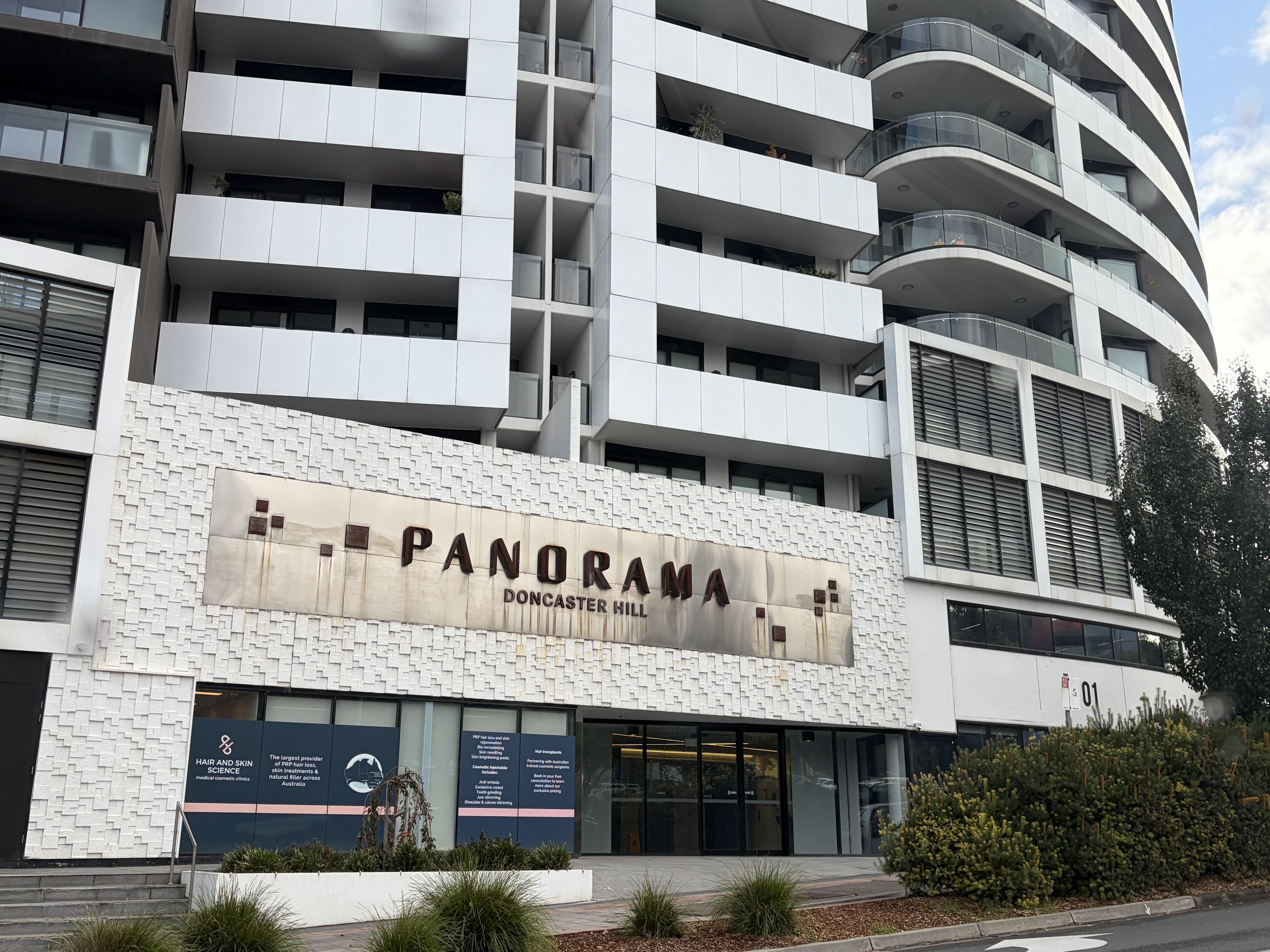
It took a little while to solve the puzzle of “White’s Corner.” Were our memories correct and why was it called Whites Corner? This intersection is now a major residential and shopping precinct. Westfield Shopping centre sprawls across one corner blocking what was once an expansive view of orchards and is now suburban Doncaster. On the other corners are clusters of multi storey apartment blocks and the intersection has been simplified to cope with the traffic and facilitate the growth.
White's corner now:
White's corner then:
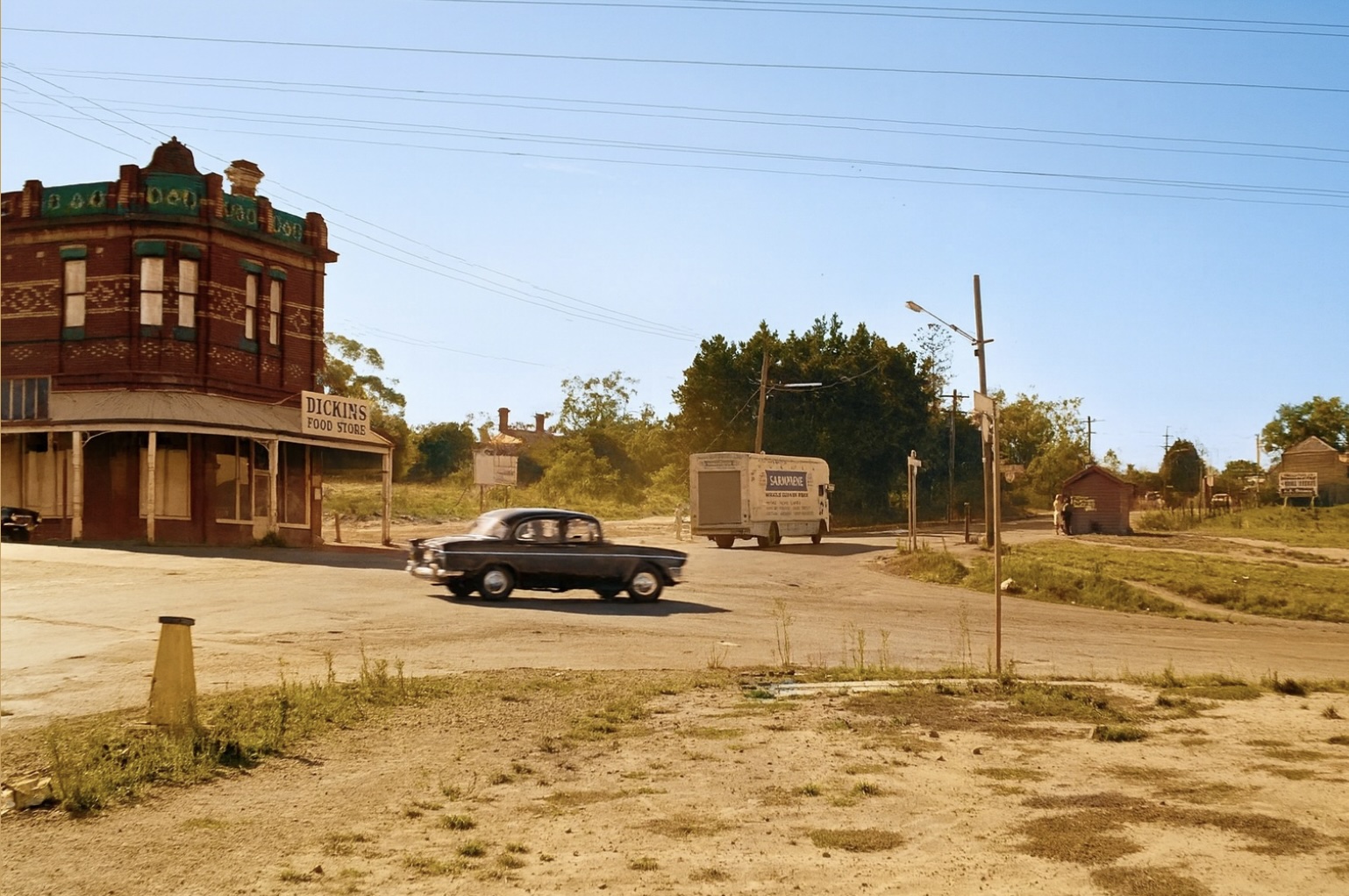
We remember it as a straight crossroad but I can find no images that match my memory exactly. Puzzle solved! it was always a three way intersection of three roads: Tram Road, which becomes Williamson Road, Elgar Road and Doncaster road. Memory is not always an entirely reliable source. From our position beside the broken down car, we would not have seen Tram Road.
I remember the lop sided car and a hotel or store where we asked for help on that windy, isolated corner. Margaret on the other hand, remembers the donkey or small horse, an ungulate anyway. No doubt small Margaret was being amused or distracted as we waited for Mr McAlpine, a neighbour, to tow us home. .
Maybe the building at the corner we remember was the store, originally Serpell’s Store, which was, at a later date, rented by a gentleman TM White, hence the name of the corner.
The broken axle at White’s Corner looms large in our childhood memories but all ended well and we presume the Talbot axle was replaced, almost certainly by Jim, and we were mobile once more.
Comments
Our Family in Wartime
We are Baby Boomers, the generation conceived and born, as normal life picked up again, after the end of the Second World War.
Although we didn’t directly experience it, that period, 1939 -45, loomed large in our awareness as we were growing up. It was just called “the war”. Our world was “post war”. Our leaders, politicians, journalists, sports heroes, teachers, had been scarred and changed by their experiences of war time.
Adults of our parents’ generation, who had been children during the “Great Depression”, spent their early adulthood in the dominant shadow of world war.
Although our own family’s experience of life during the Second World War is not a story of front line service, guns, shells, bandages and gas masks figured large in their everyday life.
We always had an awareness that our parents had met at Maribyrnong Munitions Factory, where they both did their “war work”, but it is our father’s letters and our mother’s recorded memories that have brought those six years to life for us.
Timeline:
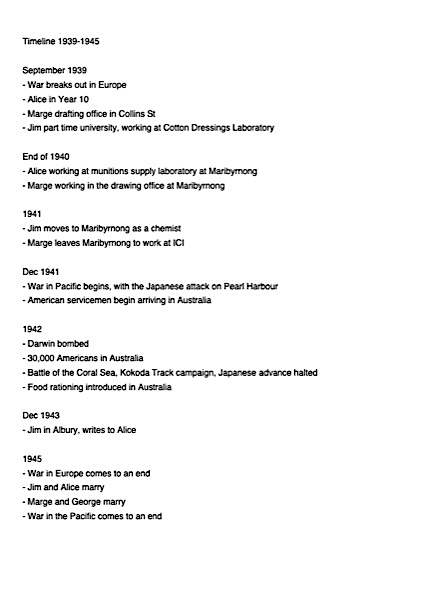
When war appeared on the horizon, in 1933, a major rearmament program for Australian Defence Forces began.
In 1933, our father was 12 years old, just settling into life as a boarder at Xavier College in Hawthorn, and our mother, 10, was still enjoying her Primary education in Croydon.
The Defence Explosives factory at Maribyrnong, where our parents eventually met, was a centre of the armaments modernisation drive: more factories, increased self sufficiency, new techniques.
From 1935, anticipating a large expansion in the facility’s workforce, new staff buildings were provided. We can imagine the meetings where the decision to build lots of facilities for women was made. They knew that it would be Victorian women, like our mother and aunt, who would provide a good deal of the labour for the massive increase in supplies, complexity and knowledge. War in Europe began four years later, and they were ready.
As war began, in 1939, Maribyrnong became a centre of research and development, as well as the main training facility for the manufacture of military explosives for Australia. They also manufactured and filled mines, depth charges and shells of all sorts. At this time, Alice was finishing her schooling, in Year 11, Marge was working in a drawing office in Collins St, and Jim was studying Science part time at uni.
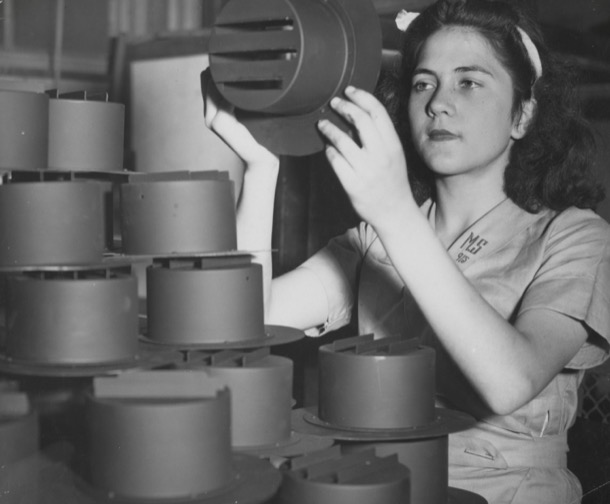
By 1942 there were there were five hundred separate buildings on the site, and 8000 workers, 45% of them women.
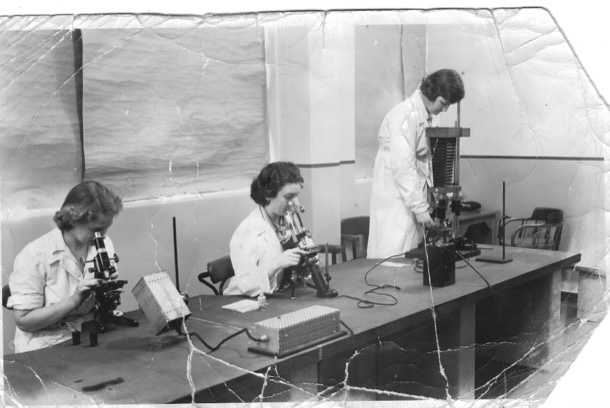
This included our mother and aunt. The first to work there, in the drawing office, was Marge. Our mother went to work at Maribyrnong straight from year 11 at MacRobinson Girls High School, at the end of 1940. On the strength of her Year 11 Chemistry, she worked with microscopes, at the Munitions Supply lab, counting the number of particles that made their way through the gas masks and investigating captured Japanese materials.
Alice, (foreground) at work at Maribyrnong:
Our father Jim began his war working as a chemist in the lab at Cotton Dressings, an industrial manufacturer based in Port Melbourne, specialising in the production of cotton wool and related surgical supplies. He had been turned down by the Air Force, because of his poor eyesight. In the middle of 1941 he transferred to Maribyrnong Laboratories. We are unsure of his exact role, but it was in the laboratory.
Jim, (left) and coworker at Maribyrnong:
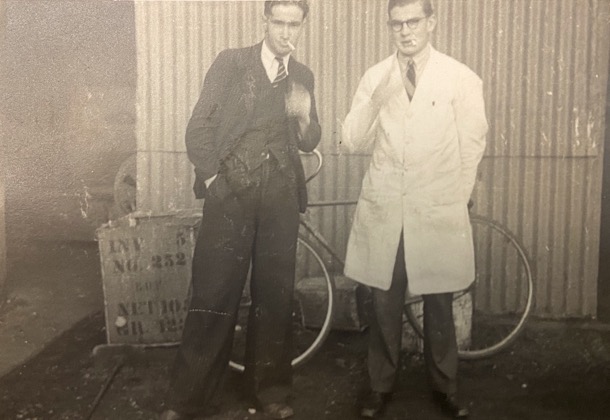
Of interest is the crate beside them . After researching, we it think may have been LOT 232 of a Mark 5 propellant or chemical component thereof, specifically prepared for naval use or long time storage in tropical environments. The NV probably stands for Non Volatile, hence the smoking right next to the crate.
On the twentieth of December 1943 Jim wrote this letter to Alice from the ammunition depot in Albury:
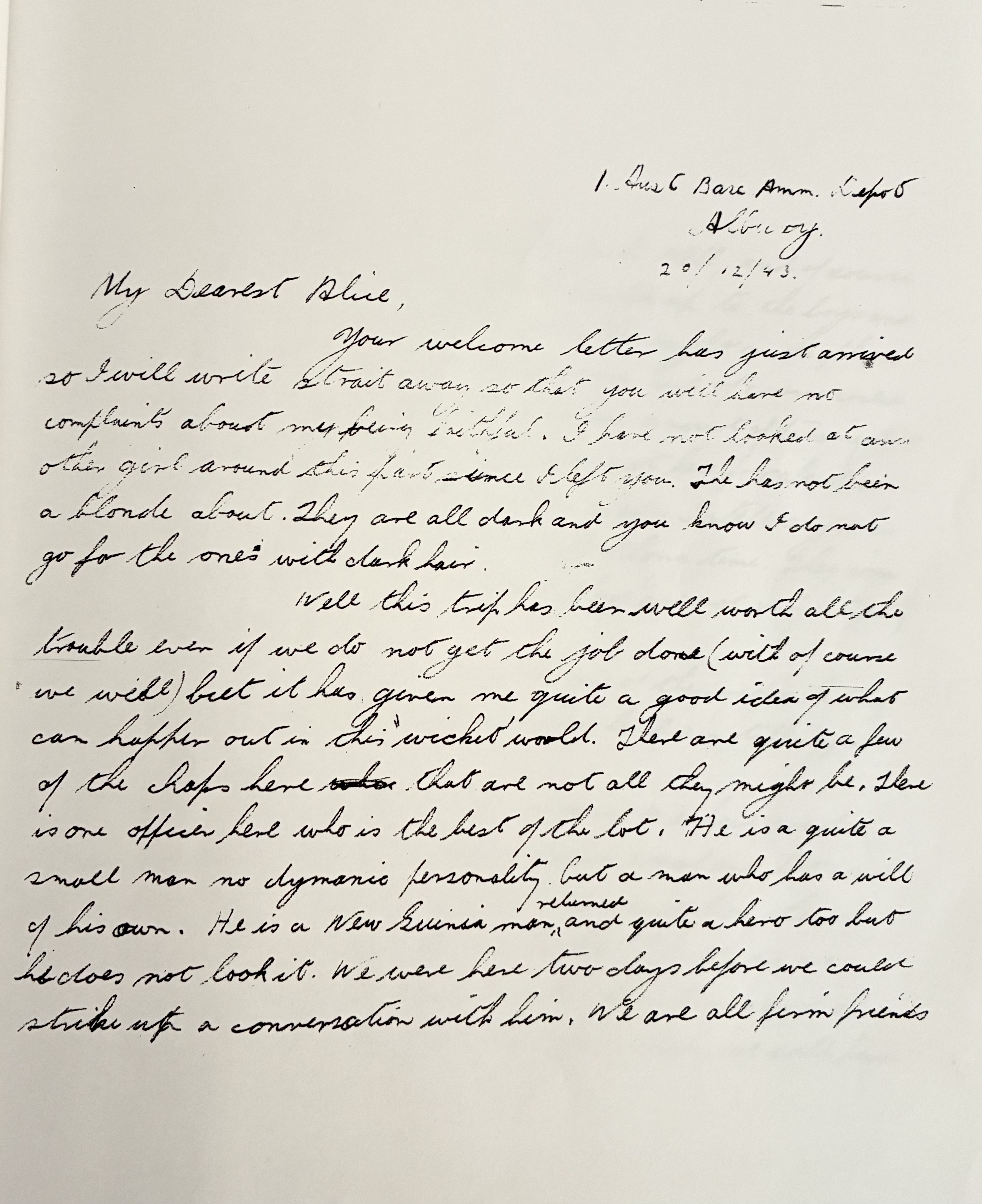
During World War 2 Albury was a military hub and quickly became a garrison town, due its natural advantages and existing rail and road network. Jim had apparently been sent there from Maribyrnong with a work colleague, Flynn, to design and make a number of tools for opening shells. This proved very difficult as metal and tools were in short supply. Jim wrote that they were both very pleased when they had opened “two hundred of one lot and three of another batch”. The tool then broke and they had to make yet another tool. Why was he in the Albury Army Ammunition Depot opening shells and what was inside those shells? We have no idea.We know that Jim did suffer blisters on his forearm after an accident in the laboratory involving mustard gas. So we wondered what was he actually doing in Albury and what type of shell were they trying to open? Why open them? What was inside them? We did some digging.At this stage of the war, late 1943, the Allied forces were concerned that the Japanese, who had used mustard gas in China, would also use it in the Pacific Theatre. We discovered that preparations for both offensive weapons and defensive equipment, were being made in Australia.
During World War II Australia held close to 1 million individual chemical munition weapons, at least 16 different types of mustard gas, some 35 types of chemical weapons at 14 major storage depots. ( mustard gas .org )
Storage of Chemical shells
1st Australian Army Base, Ammunition Depot was one of these storage depots and Maribyrnong, one of the research facilities. In 1943 one of the first large shipments of chemical warfare stocks and weapons arrived in Australia at Williamstown. Some of the men who unloaded the weapons and bulk supplies and then cleaned the hulls of the ships, suffered burns, blisters and other complaints. Many years later they did receive compensation because they were civilians. The stocks and weapons were then sent to Albury, where they were stored in open sided sheds 400 metres apart and set in a line against a hill. Ist Army Base Albury held thousands of shells, among them, 20,268 25 pounder mustard, 272 tons of 3 inch phosgene, 3,500 chemical mines etc. CW (chemical warfare) weapons and supplies were also stored in Sydney in disused railway tunnels and in depots in Queensland.
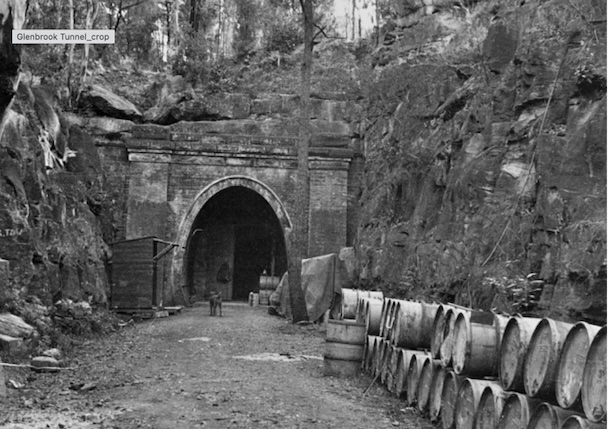
Photo: National archives of Australia
Australia was engaged in research into, and planning for, offensive and defensive CW usage. Queensland was chosen as the site for the highly secretive trials, as the climate replicated the conditions in which the CW weapons were likely to be used. The trials and the results remained classified for decades.
RAAF men, sitting on shells:
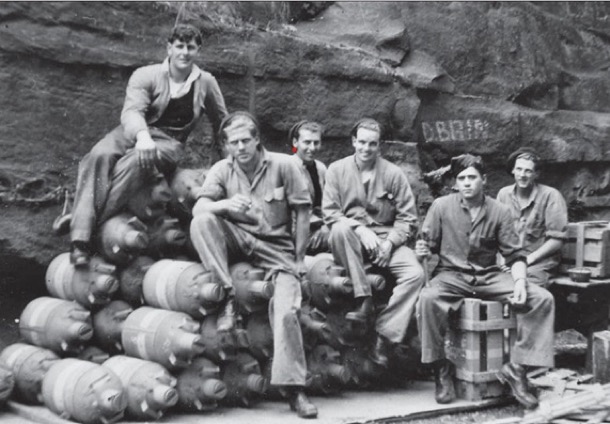
Photo: National archives of Australia
The trials were held on a remote island off the Queensland coast. All personnel were volunteers and included some service women. Wearing full protective gear, they were landed on Brooke Island and shells loaded with various chemical agents were dropped by the Airforce. The volunteers were to sample and assess the gas concentration and effectiveness. This included an assessment of the effectiveness of their protective gear. People experienced various symptoms, including fever, headaches, backaches and, in some cases, severe mustard gas poisoning. Many participants reported not being fully informed about the risks or nature of the experiments. Many received compensation years later.
Defensive equipment:
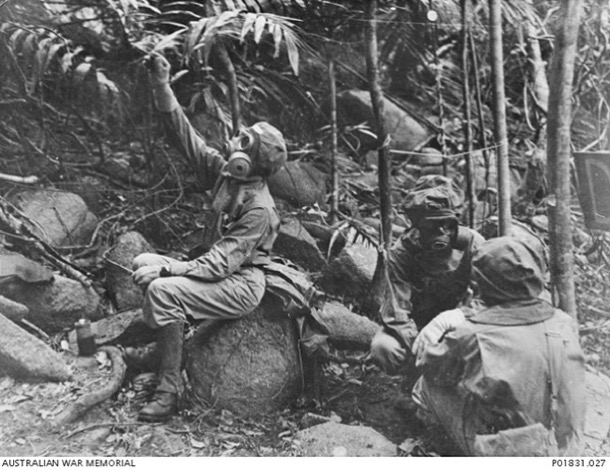
Photo: National archives of Australia
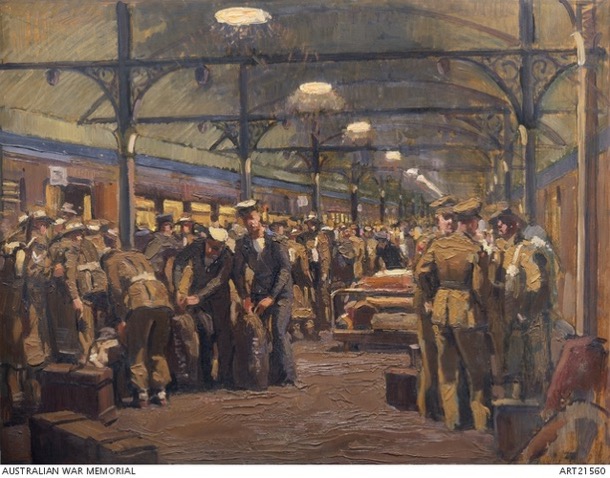
Our parents were both required to sign the Official Secrets Act, but as far as we can ascertain without any specific information, they were both involved in assessment of defensive equipment and maybe aspects of the chemical warfare shells.Back in Albury, Jim, pleased that he had accomplished what he had been sent to Albury to achieve ,was free to return to Melbourne. He and his friend Flynn left Albury on the train at 6.50 AM and arrived at Mansfield at 3.30 PM, after a very slow journey. Fuelled up with a big steak, they then started the experience about which Jim wrote in his letter to Alice.
Albury Station:
It was quite a journey, as they were intending to ride push bikes, laden with camping gear and other supplies, to Jamieson. According to local reports at the time, the Jamieson Track, a distance of thirty miles, was not well maintained and was a very rough road. Flynn was having trouble with his feet and found his bike difficult and so they swapped bikes. They reached The Gap, a very steep hill “as steep as any I have ever seen”. The letter continues, “Flynn’s bike had no brakes so I could not stop. That suited me fine until the valve blew out of the front tyre. That bike took control from then on and I did everything I knew to stop on and keep the bike up. I stopped on alright and eventually the bike stopped. The front tyre had 5 holes in it and we only had a pump.No puncture outfit or spanners to do anything to it. We were 10 to 12 miles from Jamieson. Well, I set sail on the bike thinking it was only 6 miles. By the way it was raining also and beginning to get dark. I reached Jamieson in an hour by riding like hell while it was still daylight. I had to do the last 2 miles in the dark without a light because the road had shaken my light to bits.”The chapter of disasters continued as the publican at Jamieson would not give them a bed or a meal. Therefore, having picked up a puncture kit, Jim: “set sail again. It was a long way back and was I tired! Well, when I found Flynn, he had walked 3 to 4 miles with the bike and had got an outfit to fix it with. My leather coat was wet through. We reached Jamieson about 10 o’clock and no place to sleep. There was only one light in Jamieson so we went there. The old chap put us up in a shed at the back the house and gave us some supper. I slept like a top that night.“
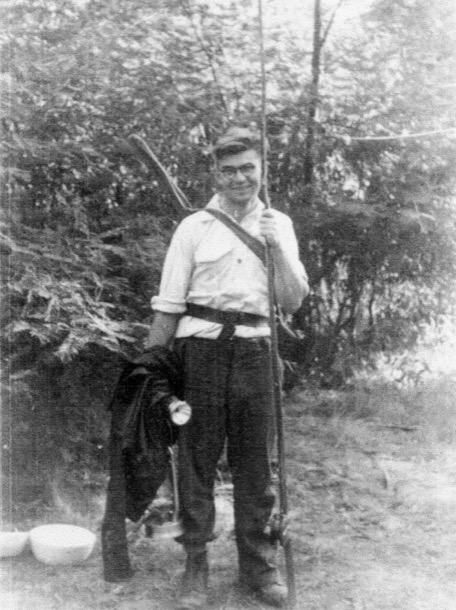
The adventure appears to have gone more smoothly from then on as Jim and Flynn found a place to camp, did a little shooting and fishing and eventually rode, via Molesworth, to his Uncle’s property Alencon, located between Molesworth and Yea. They stayed there for several days, enjoying Jim’s relative’s hospitality and then returned to Melbourne presumably on the train from Yea.
Young Jim with his gun:
We are none the wiser about the outcome of this adventure and the nature of the task Jim and Flynn were sent to complete, as we have no more letters. Maybe he had already said too much in these letters to Alice as it was wartime and there were many restrictions in place on the freedoms we take for granted today.
Marge and Alice discuss their arduous journey to Maribyrnong from Surrey Hills where they lived at the time.
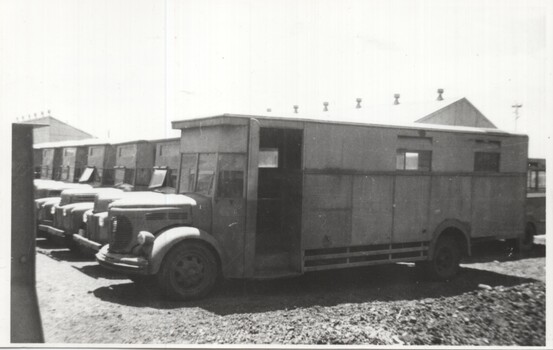
They speak of traveling on “buses that were like army trucks”.
These were called “austerity buses”. Timber and canvas bodies were built onto second hand truck chassis. The factory that made them was in Preston. Here is a photo of the "austerity buses" at the factory:
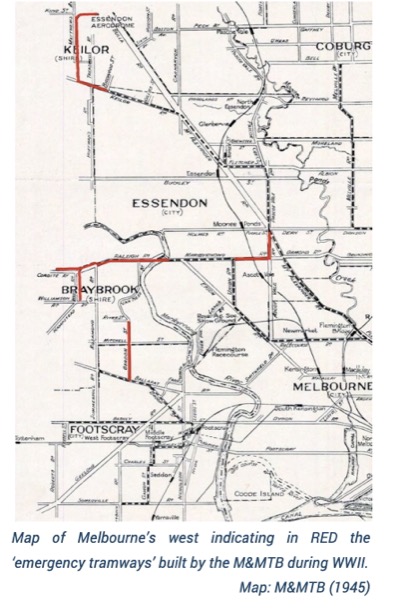
Later a tramline was built specifically for the Maribyrnong workers. In 1941 the Commonwealth (under its emergency powers) ordered the State’s Metropolitan Tramways Board to create new tramlines, one of which was put in place from Moonee Ponds to the Ordnance Factory to do away with the austerity bus service.
This article from The Argus from October 1940 discusses this decision:
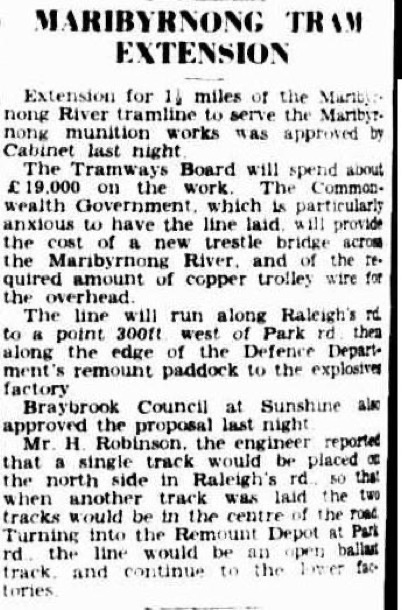
Eventually, the lines were joined together to create one of the strangest tram routes in Melbourne - the Number 82 from Moonee Ponds to Footscray via the byways around the Maribyrnong site.
After Japan came into the war in late 1941, the threat of attack on the Australian mainland became much more real.
At Maribyrnong, safety was a massive priority. The buildings were well spaced on the site, with earth and concrete blast walls to contain accidental explosions.
Materials had to be transported around the site, in such as way that friction and sparks were avoided. “Clearways” were developed: elevated smooth roads, on which vehicles with rubber tyres drove slowly and carefully.
Footpaths, too, were concrete, containing a lot of gypsum, to minimise sparks.
There were air raid precautions, with bunkers, individual ones, just a pipe vertically buried in the soil, and slit trenches for groups. They must have been well aware that a munitions site was a prime target for enemy attacks.
Like many Australians, our grandfather built a shelter in their Surrey Hills backyard.
Alice and Marge mentioned almost in passing that their parents were in the ARP, and went out after work, Alfreda looking very “elegant” in her “dungarees”.
A Government campaign recruited men who were too old to serve, and also women, to be volunteer air raid wardens (ARP) for Melbourne’s municipalities.
This charming old photo depicts Sydney shop girls preparing for ARP duty:
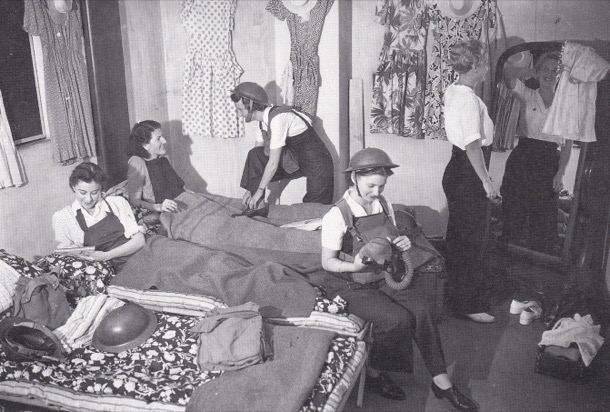
Photo from the book series "Australians at War"
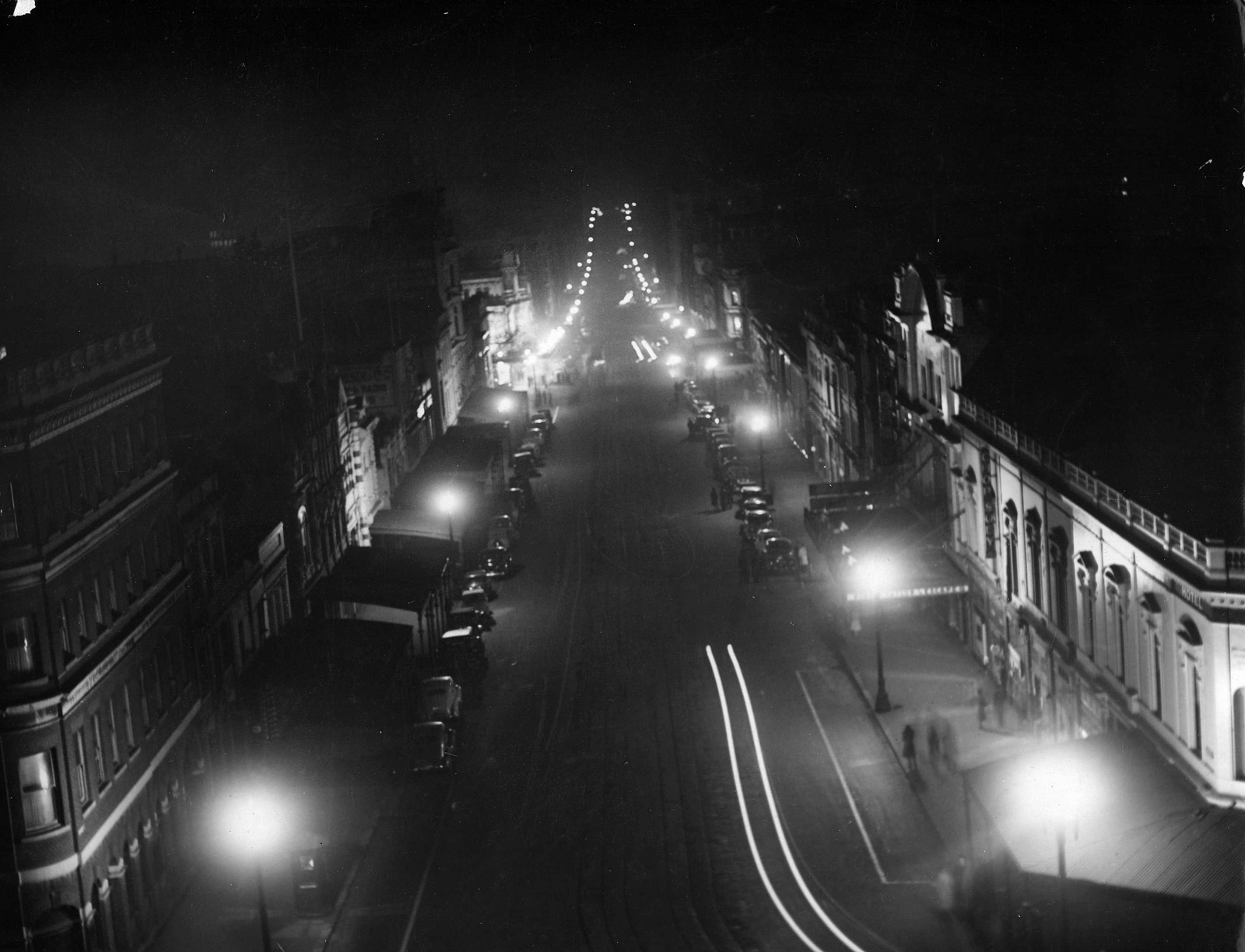
The Australian system was modelled closely on the English one. ARP wardens carried gas masks, helmets, torches and rattles or whistles. Their main duty was to patrol the black out, that, in Melbourne was really only a "brown out”.
Blacked out Melbourne street:
Blackout masks for cars:
Photos: State Library Victoria.
Our Grandfather, Alf was 49 years old, when war broke out.
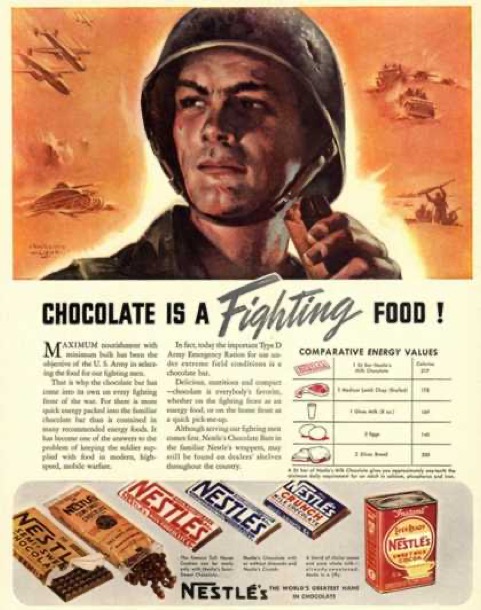
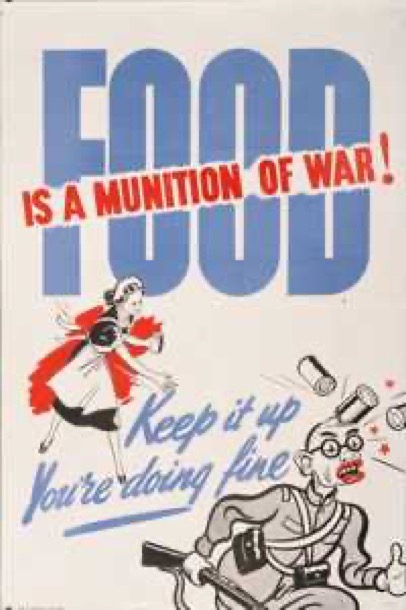
Using the British system of rationing as a model, Australia introduced food rationing in June 1942. Customers surrendered coupons to retailers when they took the goods. The retailers passed coupons back to wholesalers, who, in turn passed them back to producers and eventually back to the Rationing Commission.
Photos: Australian War Memorial
During the war, Melbourne was a major base for American servicemen, with more than 30,000 stationed here in 1942. Many were housed at Camp Pell in Royal Park, as well as in requisitioned guest houses and other smaller camps in Melbourne. For instance 200,000 US personal: Army, Airforce and Marine, passed through the MCG ,which was another transit camp.
The Americans had quite an impact in wartime Melbourne. Their smart uniforms were well tailored and they were dressed ‘superbly’, compared to the ‘shabby ‘ uniforms of the Australian personnel. They made quite a spectacle as they marched through Melbourne. The phrase ‘overpaid, over sexed and over here’ was a local sentiment seen in newspaper articles and no doubt in conversation.
American servicemen on the streets of Melbourne:
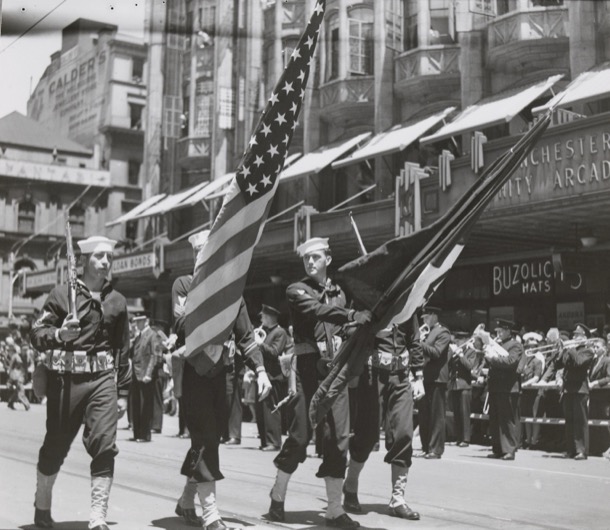
Photo: State Library Victoria.
The influx of Americans brought immediate cultural changes, as they introduced Melburnians to hamburgers, Coca-Cola, and coffee. They also came with nylon stockings for the girls, and Mars Bars for all and sundry. The American privates often earned more than Australian sergeants and their popularity with local women led to significant friction. The antipathy to the Americans was also fed by the feeling that they took all the credit for turning back the enemy. Marge and Alice comment on the noticeable presence of American Military Police. In fact they say that the streets were ‘swarming’
with Military Police. Street brawls did break out, and in 1943 one such brawl involved 2000 to 3500 soldiers and civilians.
Social life during the war consisted of going to the movies and newsreel cinemas. Jim and Alice did that a lot. There were also local dances at Surrey Hills. Marge loved these, and tripped off in a long evening gown and velvet evening coat, no doubt made by Auntie Bert. She danced with the local men and boys in their bow ties and suits.
Marge, like many Melbourne girls, found the presence of the Americans exciting, and she particularly enjoyed going out dancing with them.
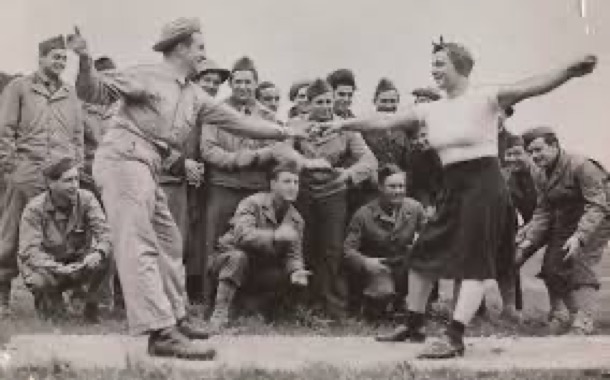
Photo: State Library Victoria.
It may have been at one such venue that she met Captain Bill Jones, an American Marine. He was stationed in Ballarat. As there was an understanding between them that they would marry after the war, Marge was allowed to visit him in Ballarat. Marge and the family expected that she would become one of the 15,000 war brides who moved to the USA after the war. This was not to be, as George Rostos, a Hungarian refugee, began courting Marge, once he knew that her Bill Jones was not an Australian serviceman, but an American. George won out, and they were married at the end of the war.
News of the war was from the newspapers and radio but also from newsreel cinemas.
Marge ‘haunted' these in an attempt to get news, while Bill was away. She comments that the war reporting on films was not only heavily censored, but that the fighting was always filmed at a distance and never at close quarters.
During the last year of the war both Marge and Alice married. The war ended in Europe in May 1945 and in the Pacific Theatre in September. Marge married George Rostos a Jewish Hungarian refugee and Alice married Jim, a Roman Catholic. Both these romances were a product of the war. George escaped the rise of the Nazis in Europe and came to Australia, and Alice and Jim met at the defence facility at Maribyrnong. According to Marge, their parents coped well with their unusual choices, as they all negotiated the mostly welcome changes brought by the end of the war.